La Moustache
Lutz Bacher, Mary Helena Clark, Jay DeFeo, William Eggleston, Vincent Fecteau, Maureen Gallace, Renee Gladman, Doris Guo, Stephen Kaltenbach, Paul Kos, Lee Lozano, Danny McDonald, Kazuna Taguchi, Leo Valledor, Jonathan Velazquez
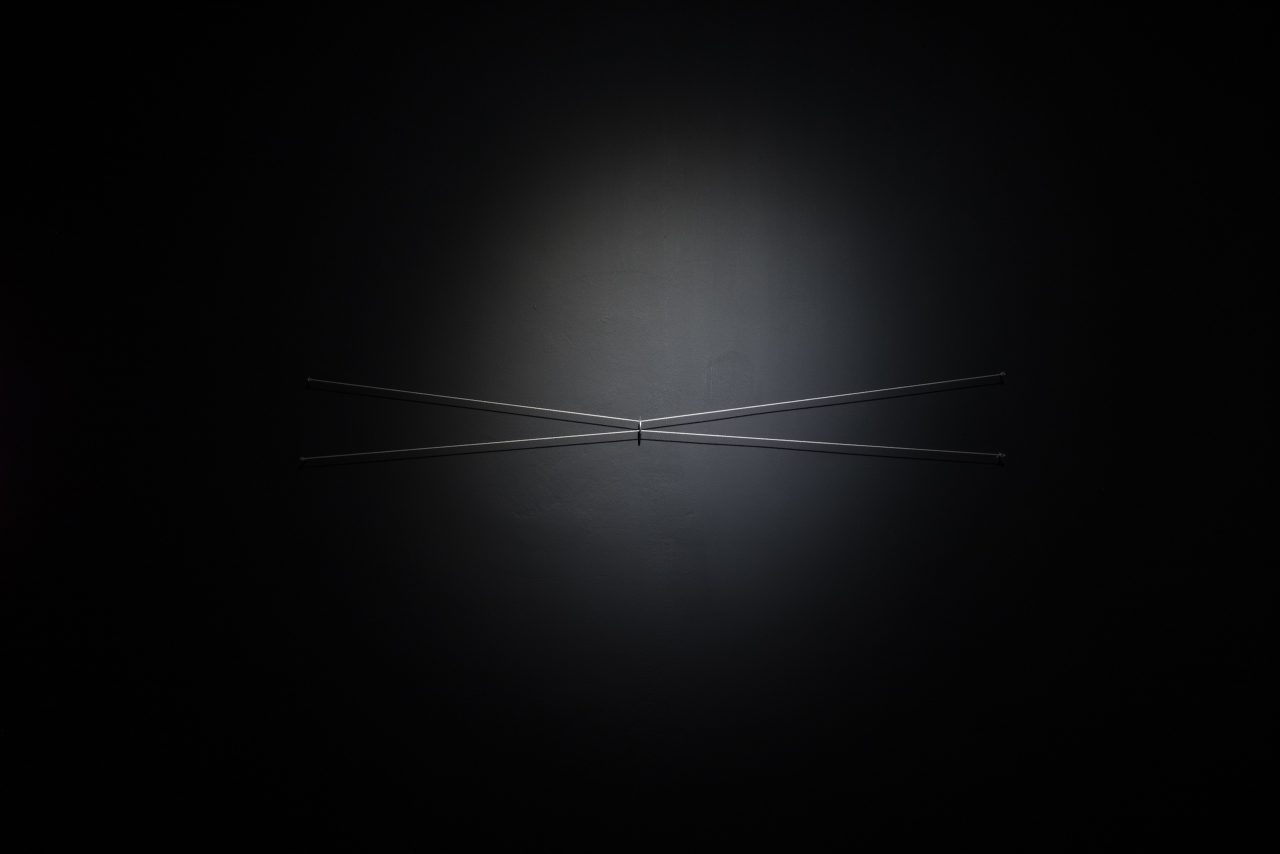
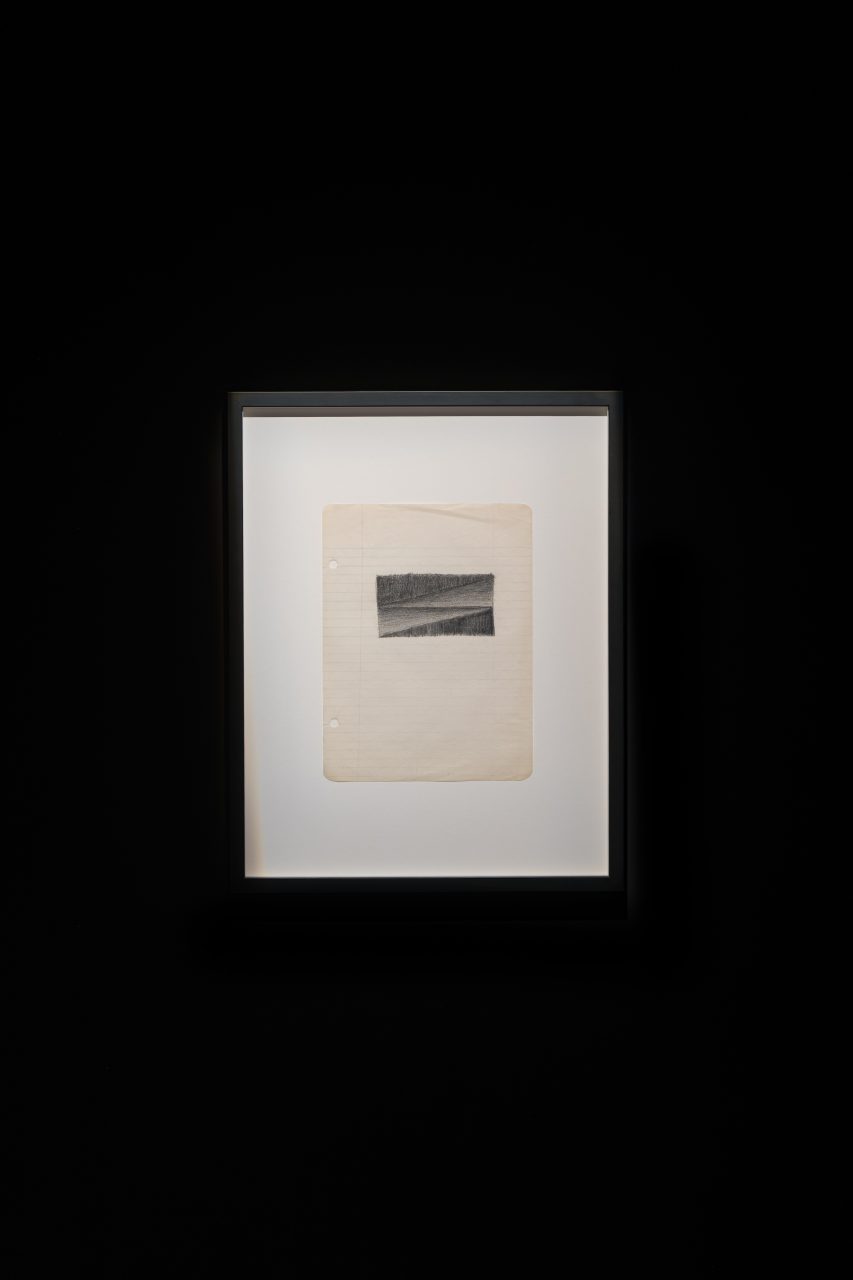
Empty Gallery is pleased to present La Moustache, a group exhibition organized by San Francisco-based curator and writer Jordan Stein. Drawing loose inspiration from Emmanuel Carrère’s existential thriller of the same name, Stein’s exhibition charts a cinematic passage through fertile yet treacherous psychic waters between expanded consciousness and cognitive disintegration, protean creativity and veiled monomania. Aiming at the provision of an experience rather than the illustration of a thesis, the ensemble of works in La Moustache engulf the spectator in a kaleidoscope of potential meanings in which accepted borders between sense and nonsense, as well as interior and exterior, are rendered porous. Vertiginous shifts in scale, affect, and subject matter abound. Formal motifs distort and dislocate across the gallery space in a play of convergence and divergence. Disparate practices—from street photography to process-based conceptualism—are brought together by a yearning to transcend the known, to take flight from reification, and to escape from “common sense” in the interlinked domains of language, society, and the self.
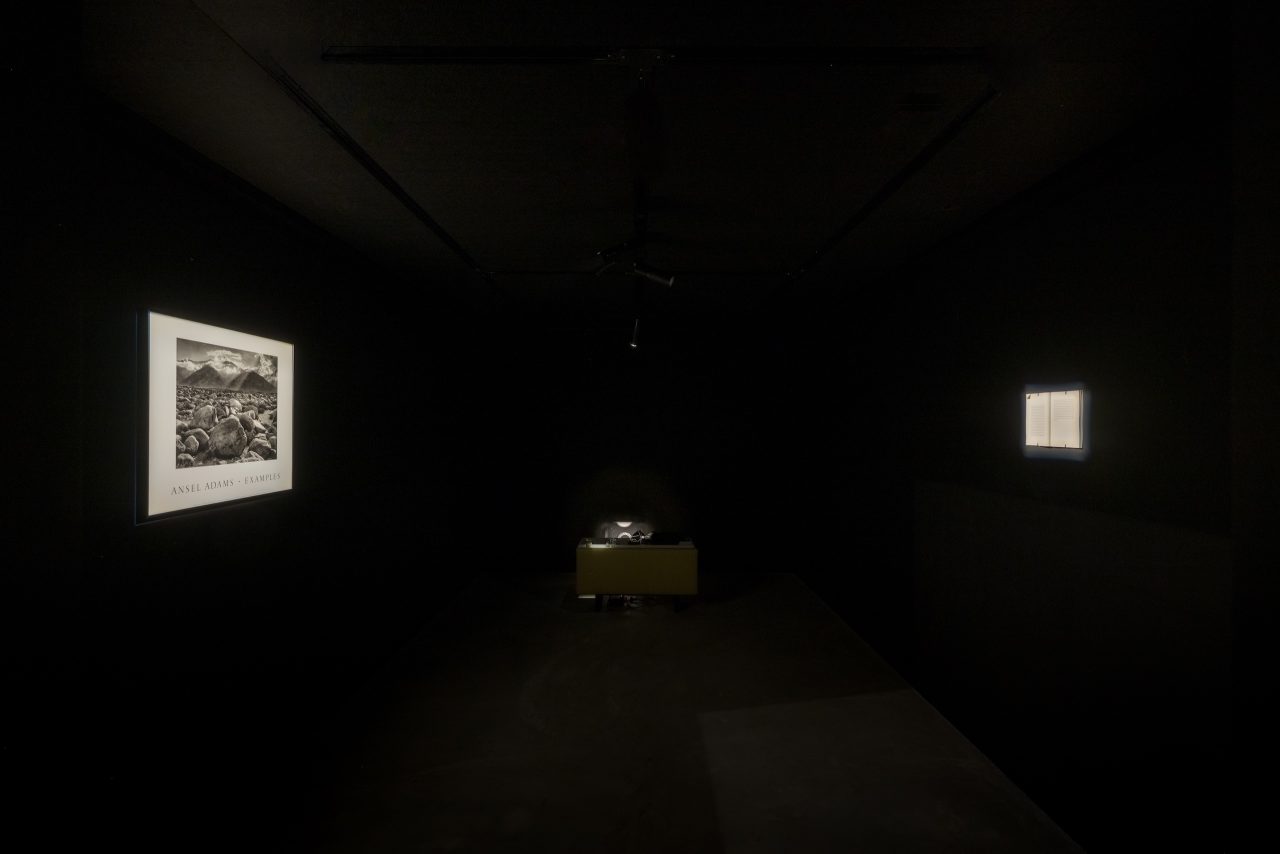
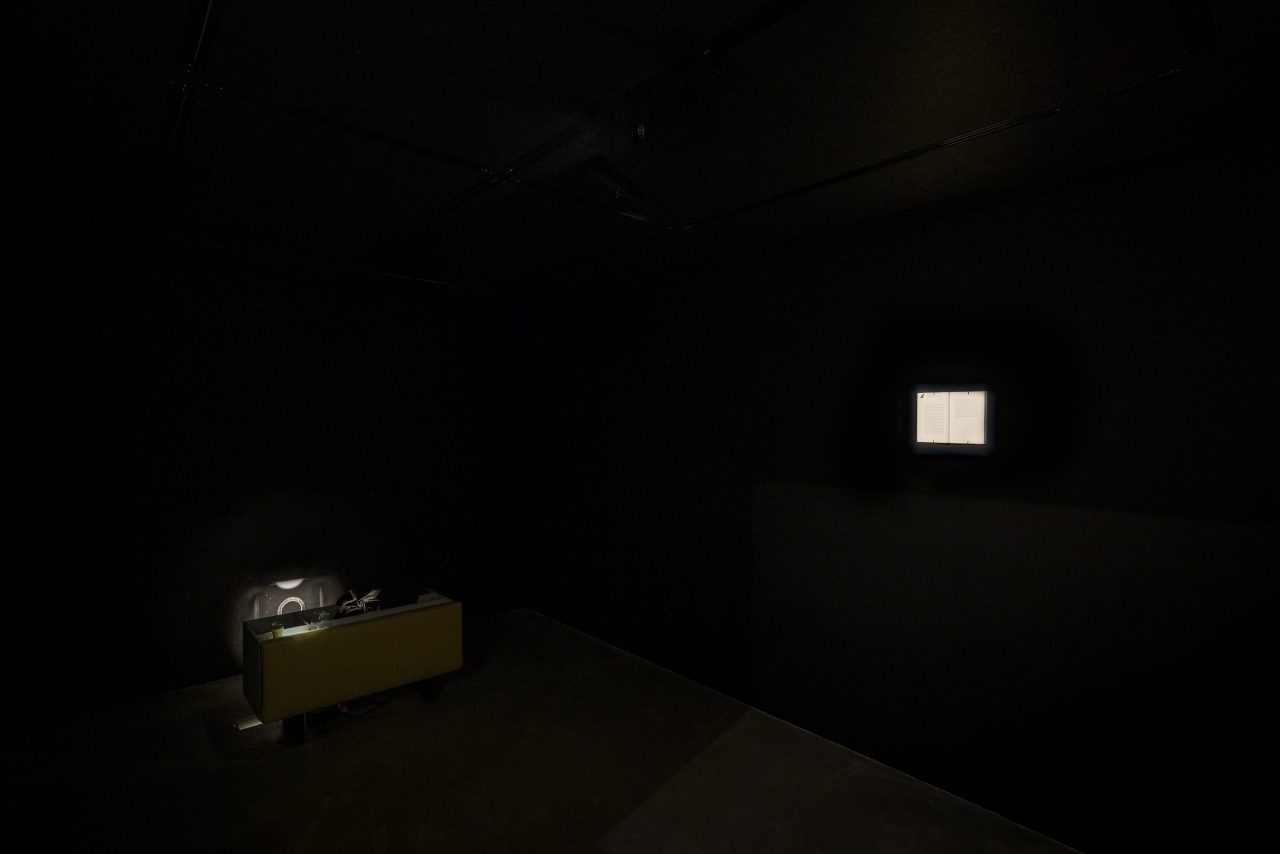
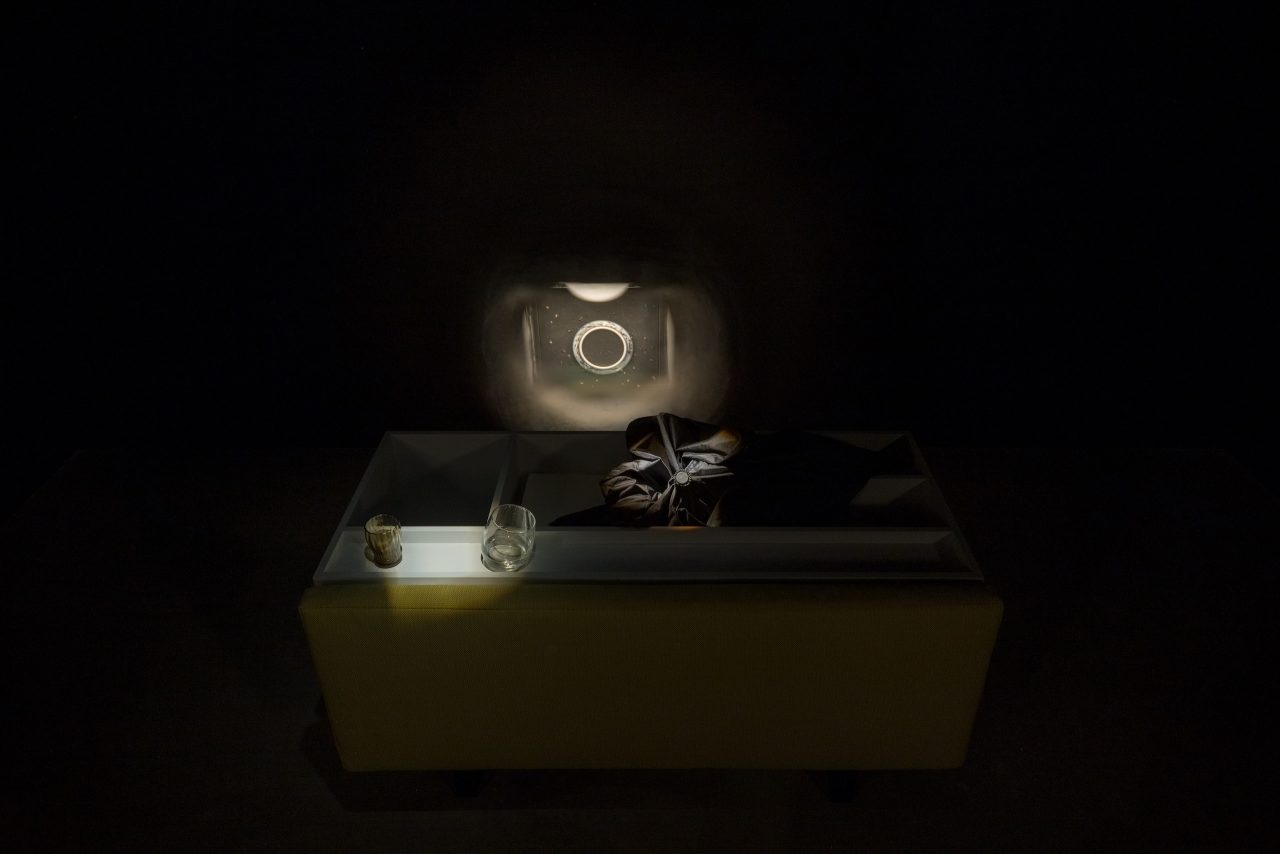
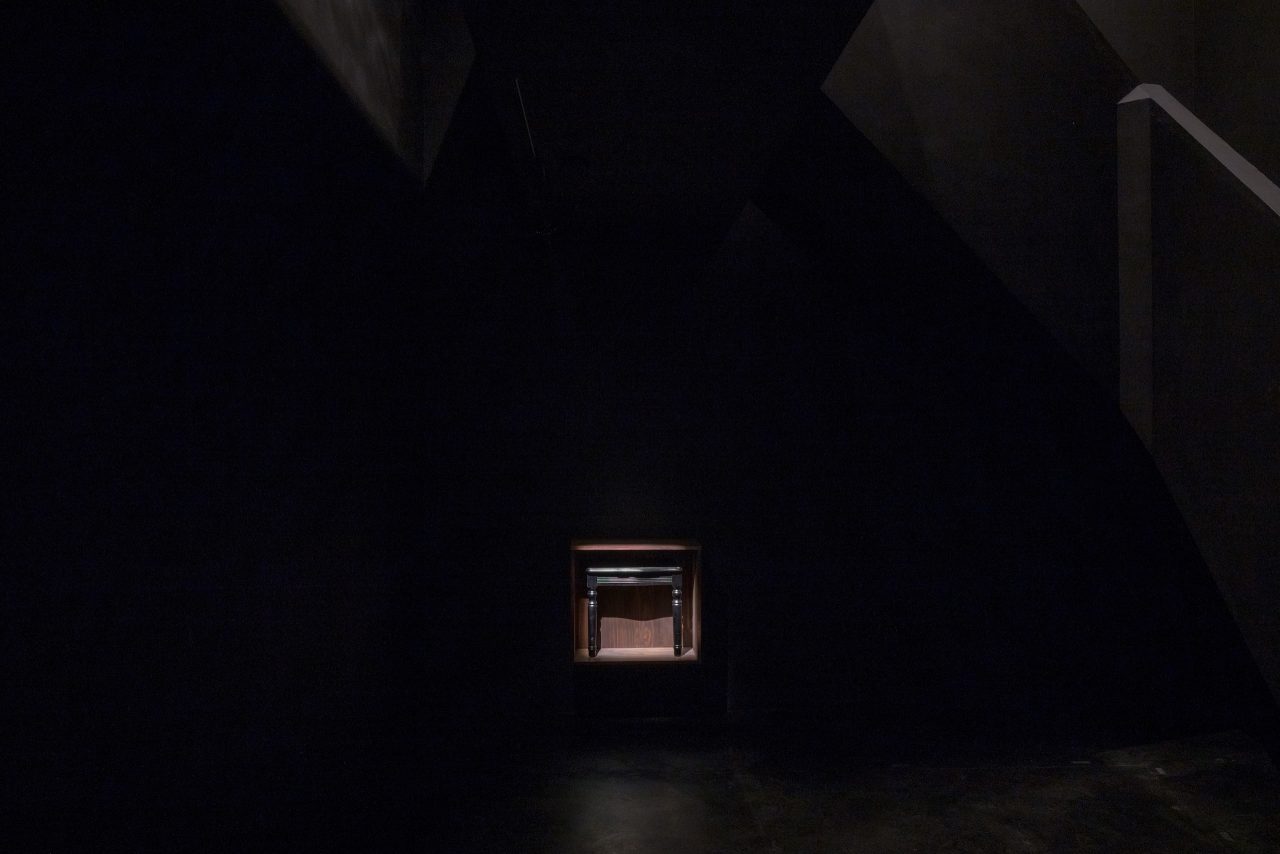
The journey begins with a series of luminous riddles. A framed poster (Ansel Adams), an open paperback book (Renee Gladman), and a toppled shoe-cabinet (Doris Guo) conjure the atmosphere of a suburban interior or spectral waiting room. Poised somewhere between found object and artwork, these pieces figure the dialectic between art and life as an endless question, expressing a relationality which is always exceeding its bounds, overflowing its container and leaking through the grid.
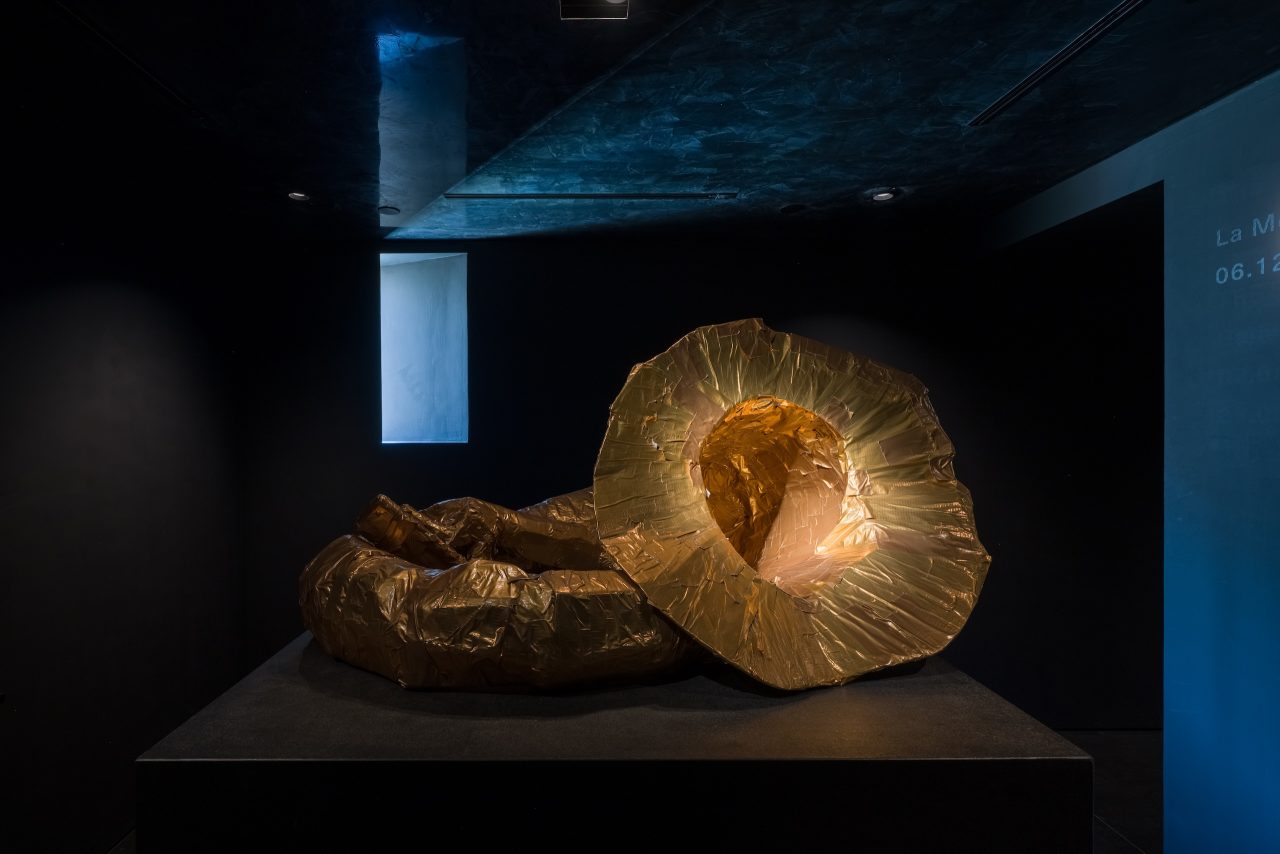
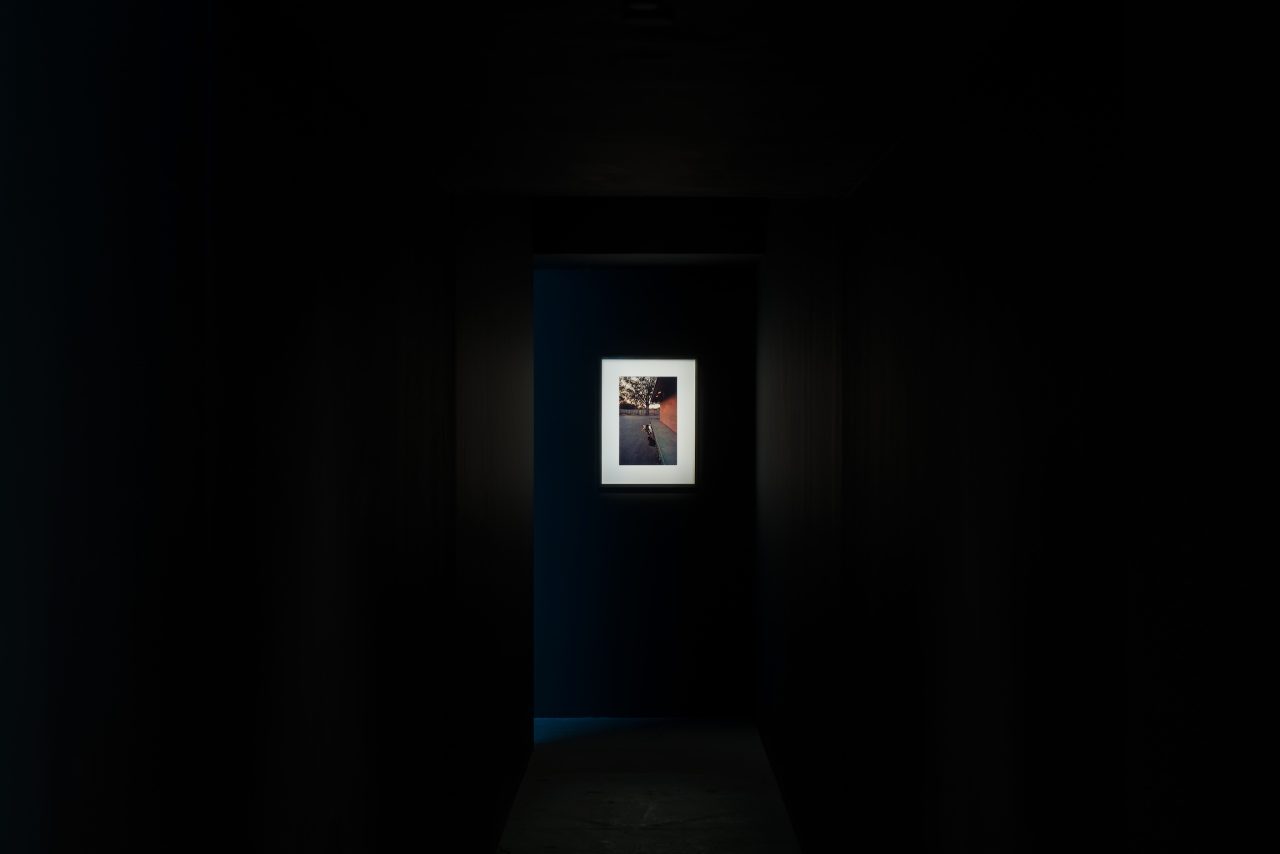
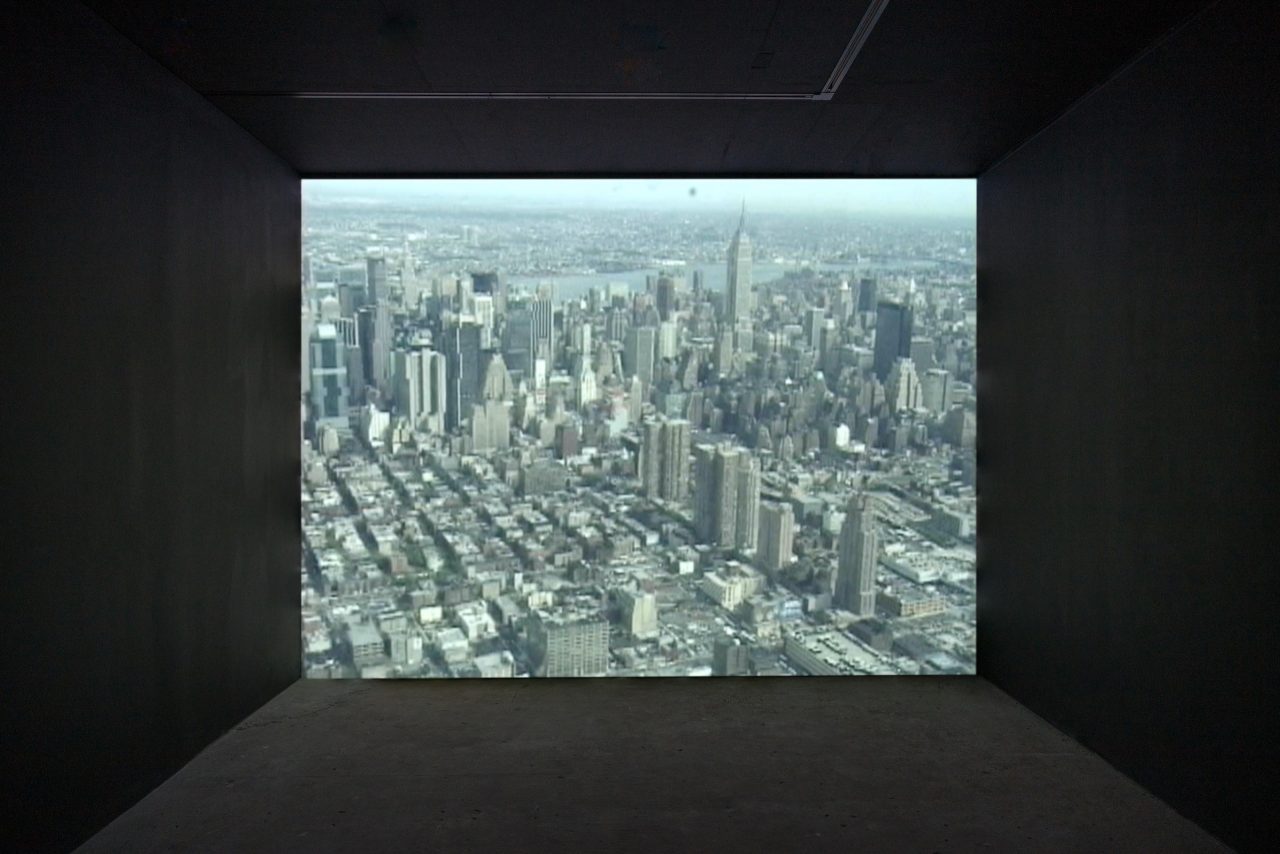
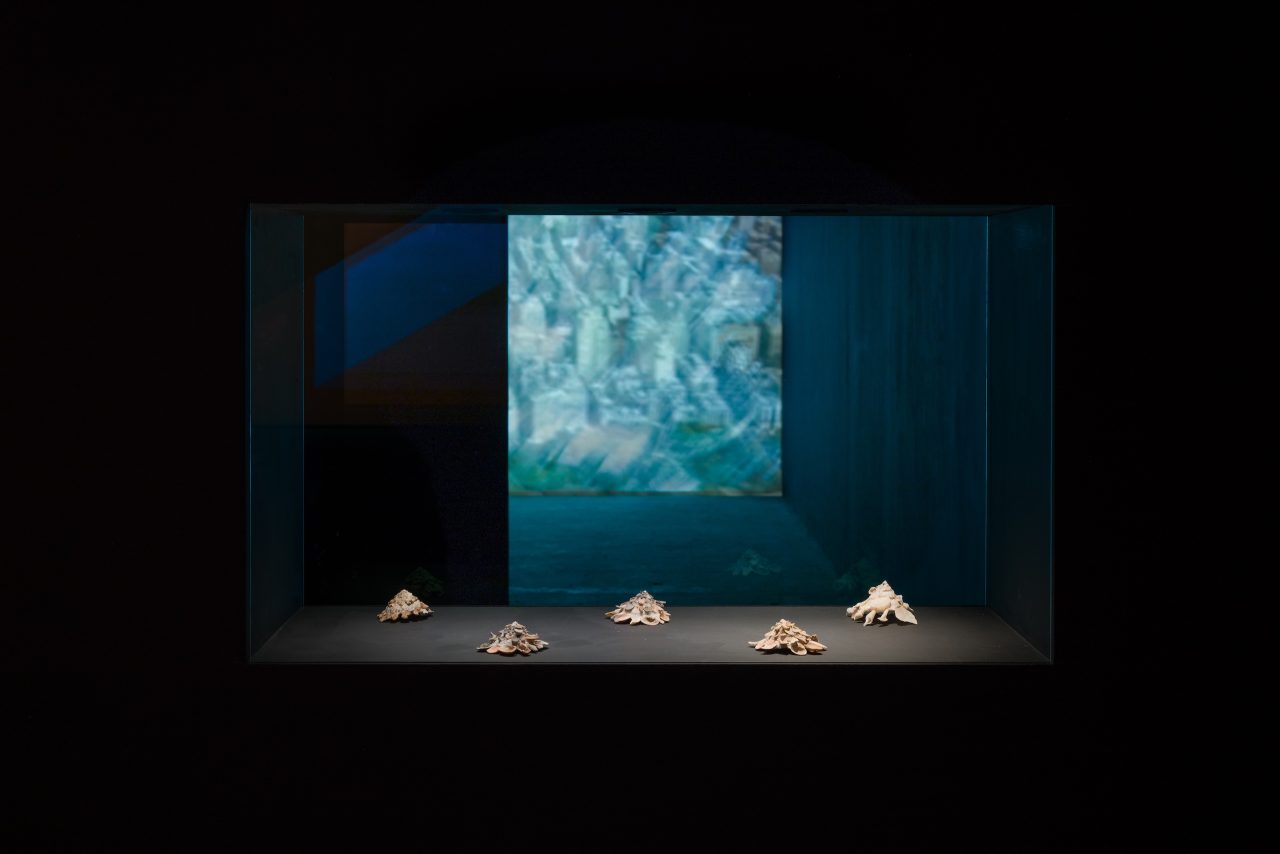
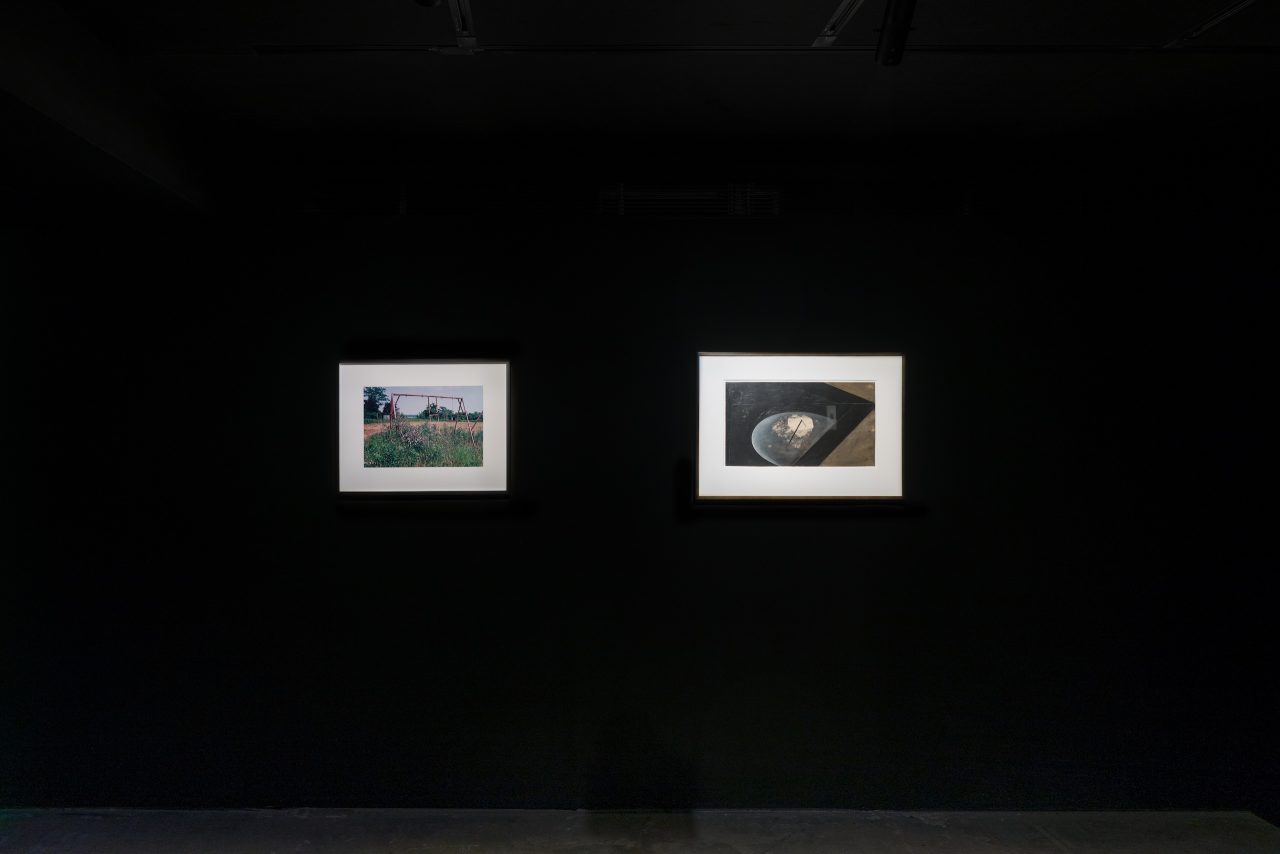
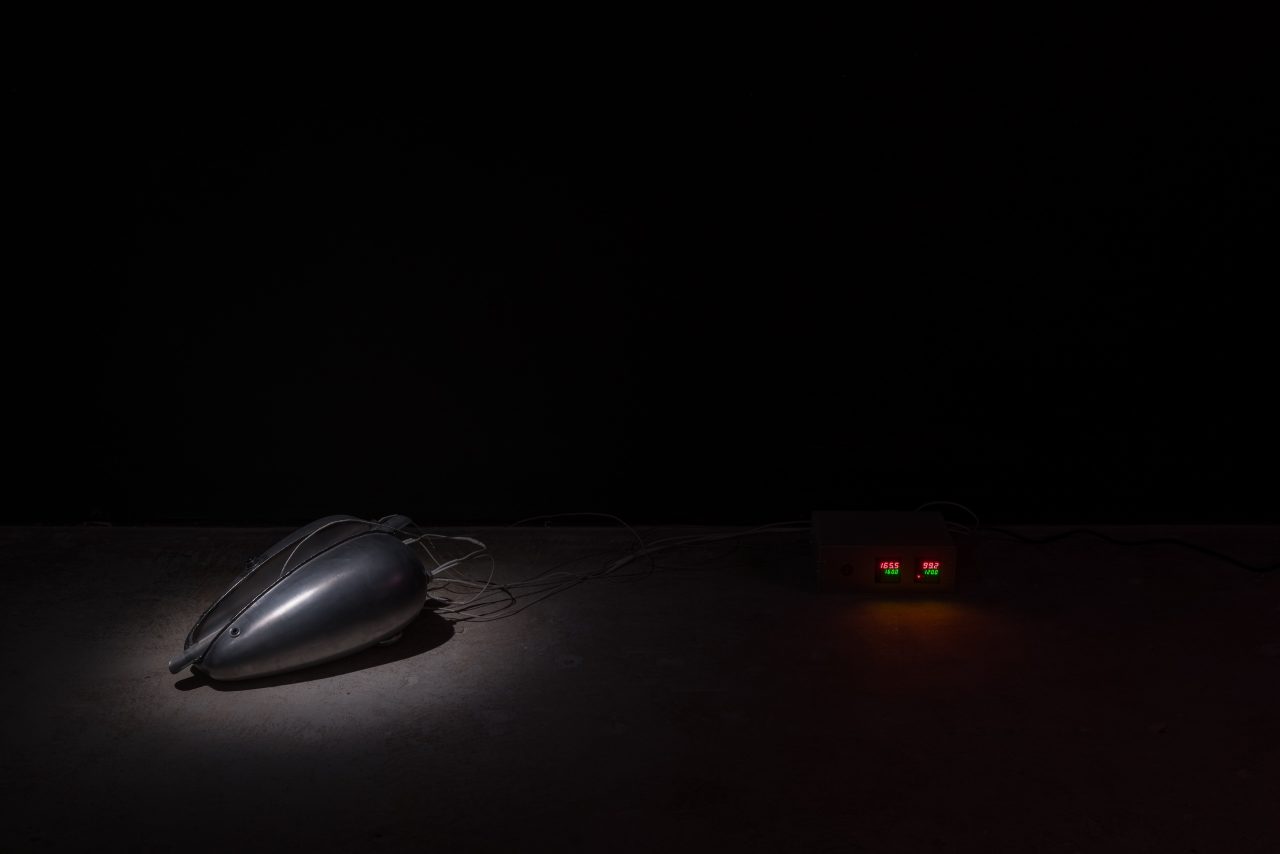
Departing from this initial space of holding, the curving form of a life-size tuba projects us into the mystery. Floating at the end of a long hallway, the image of a puddle reflects an exterior somewhere. Like all of William Eggleston’s photographs, it transcends the merely factual, approaching the surreal through sheer vividness of presence; its liquid darkness a seductive enigma. Turning the corner, aerial footage of New York’s urban topography ripples and liquifies in an attempt at resolution. Surfaces shift and slide over one another in endless permutations under the pressure of Lutz Bacher’s artful indeterminacy. Grid as landscape as flickering mirage. Stare long and hard enough, and one harbour or financial center might just transform into another. A motif of the exhibition articulates itself. What seems at first to be static and graspable is revealed as possessed of a fugitive mobility. A regime of depth and interiority comes into hostile confrontation with a series of neurotically charged surfaces: a shallowness in which everything seems to float, and to reflect with the logic of a dream or delusion. As in Kazuna Taguchi’s photographs or Maureen Gallace’s paintings, the real is a vector—a macguffin—situated somewhere between the incommunicable specificity of the local and the flattening abstraction of the global, forever evading our approach.
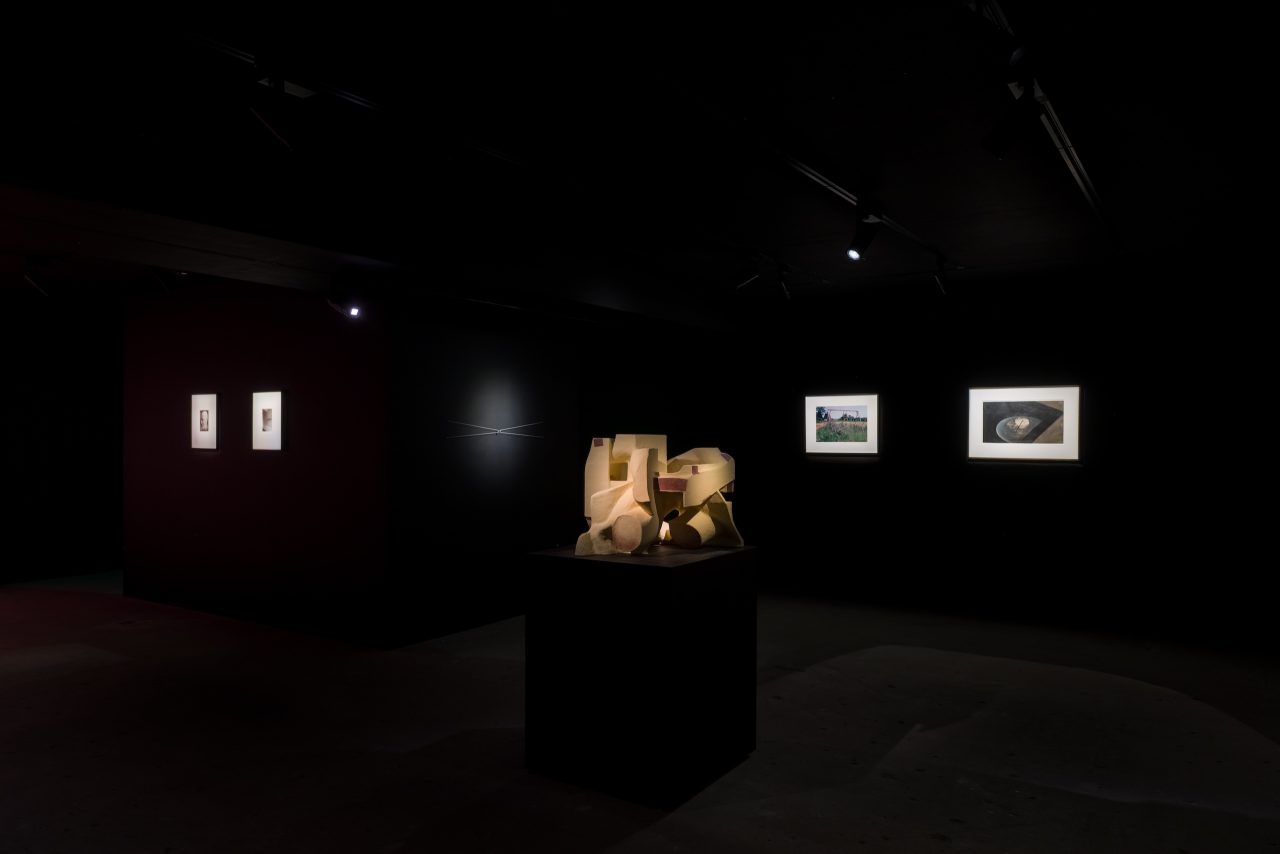
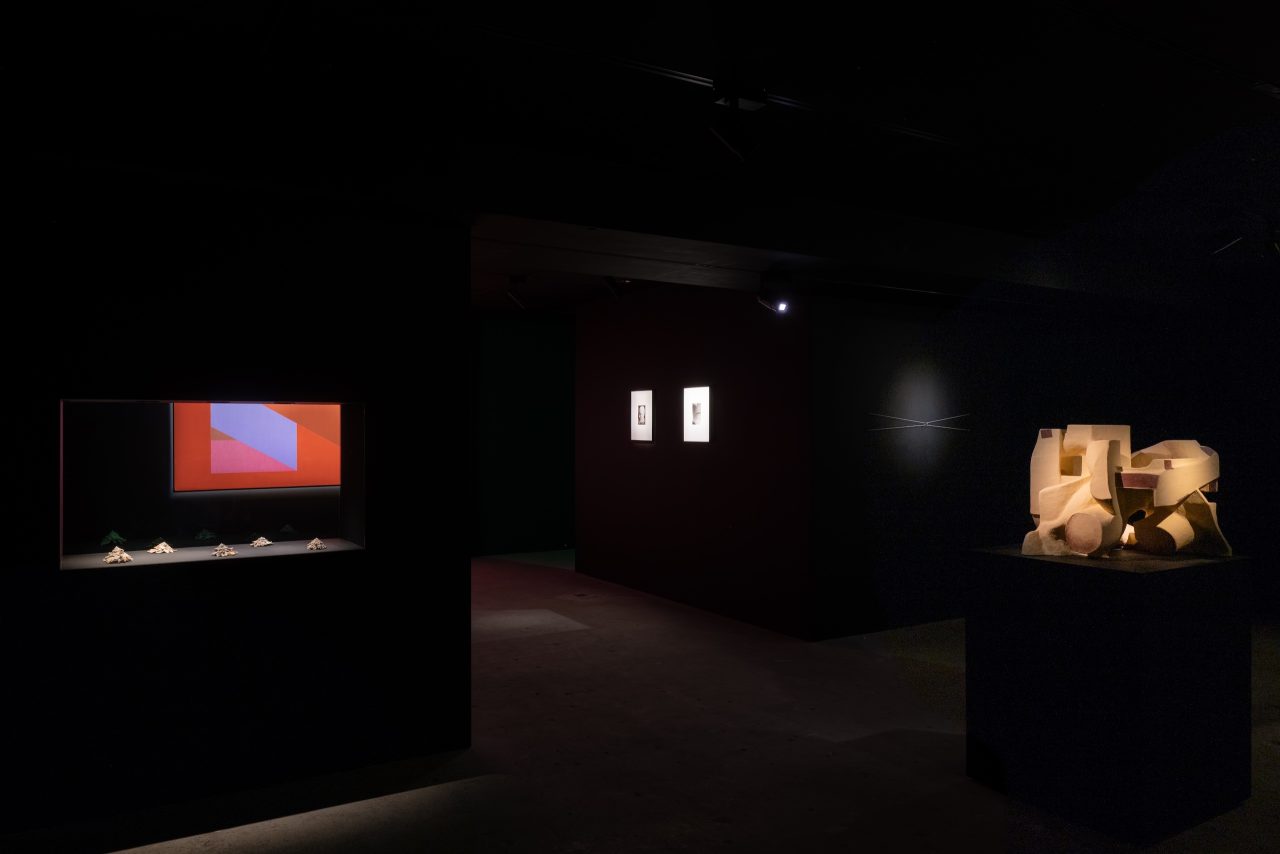
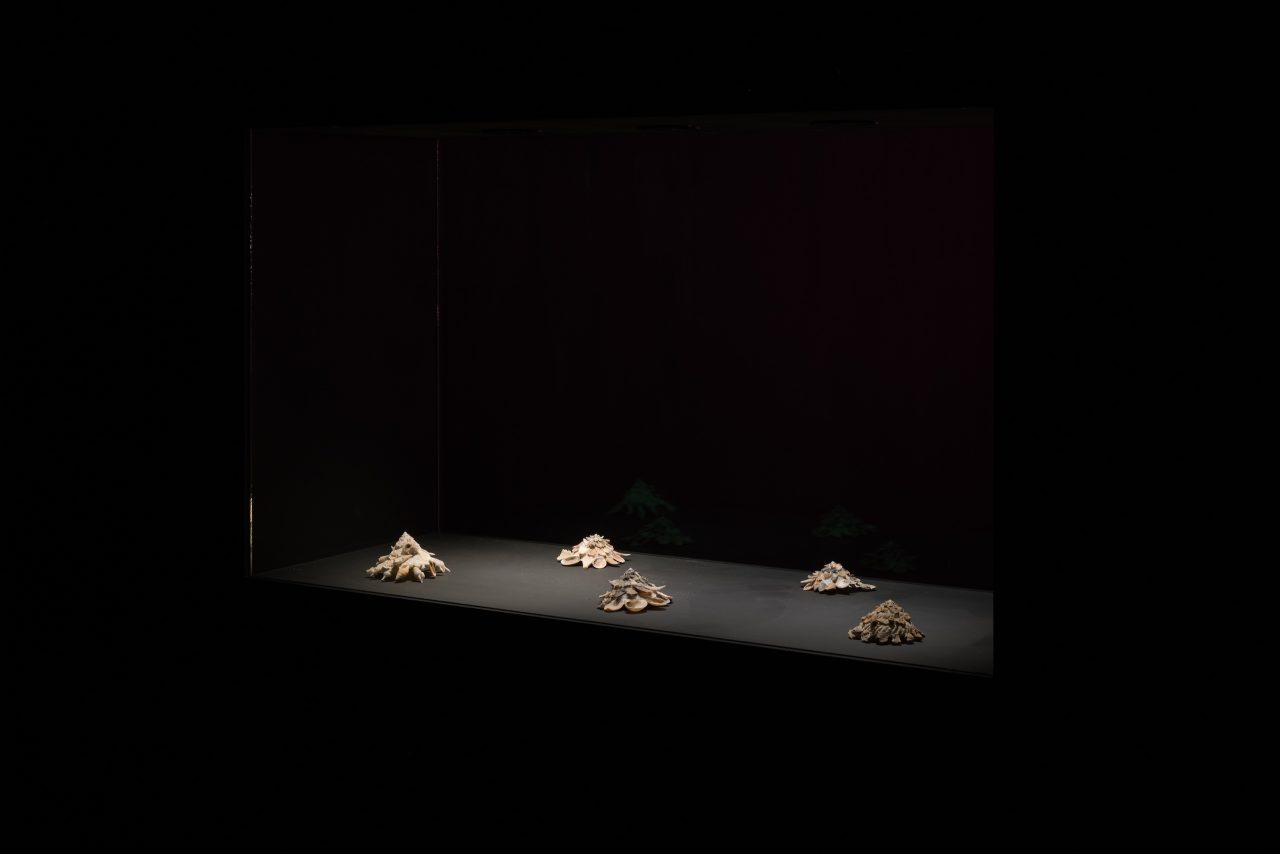
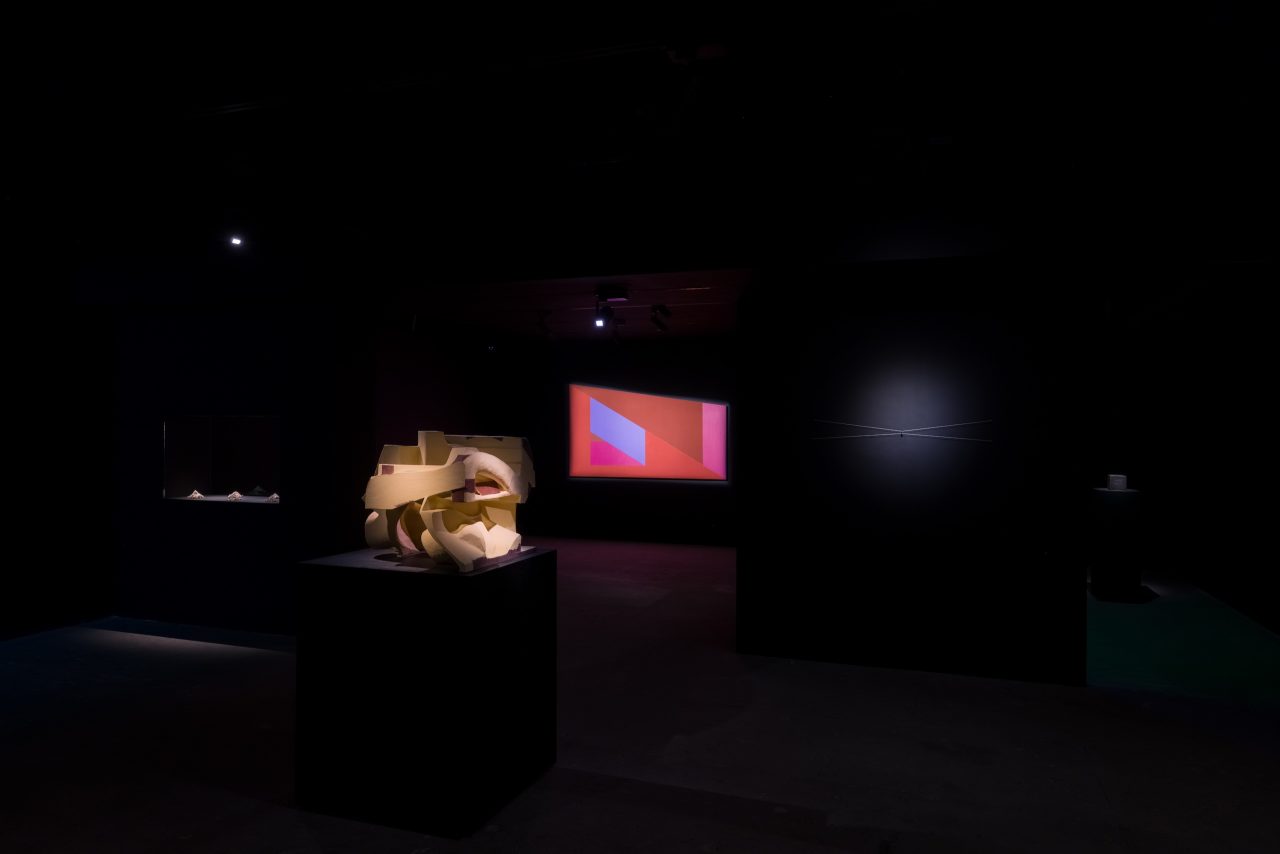
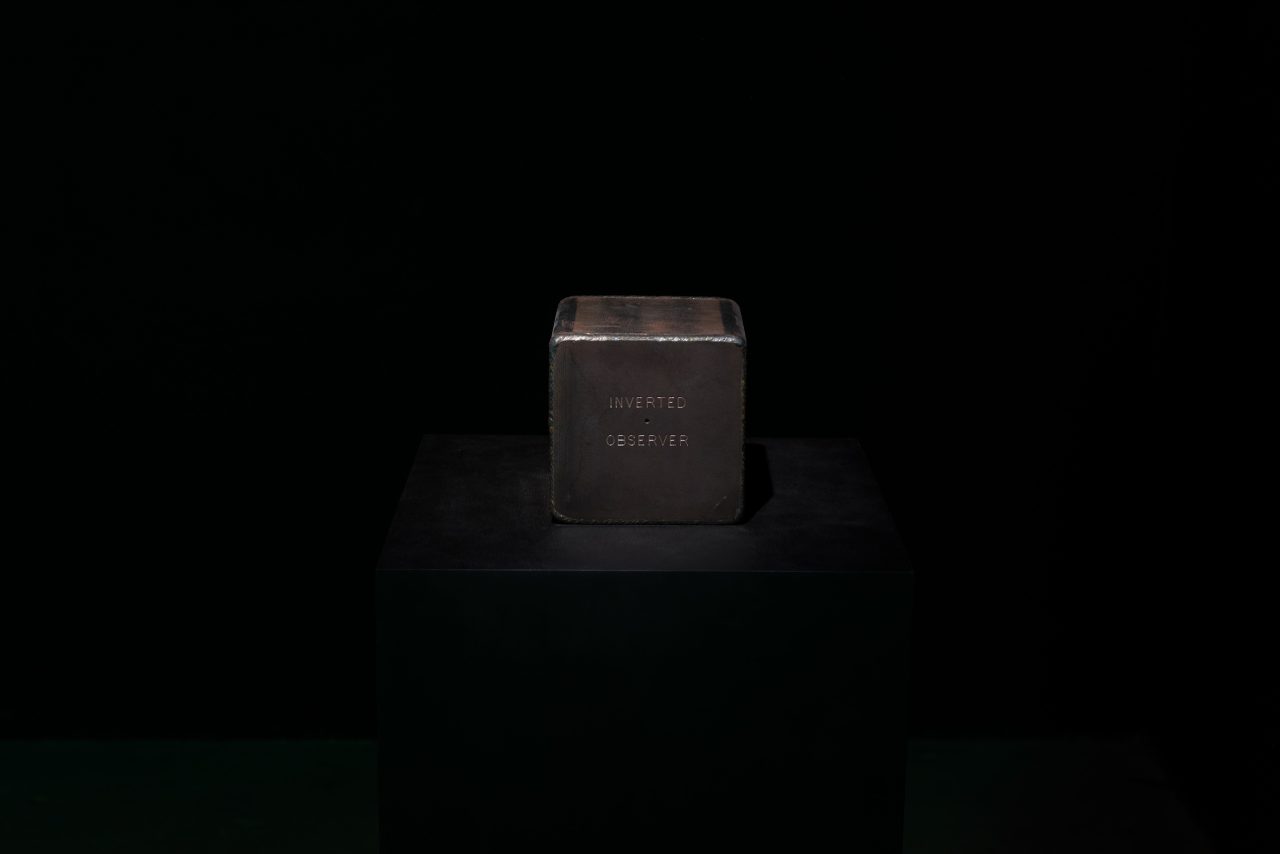
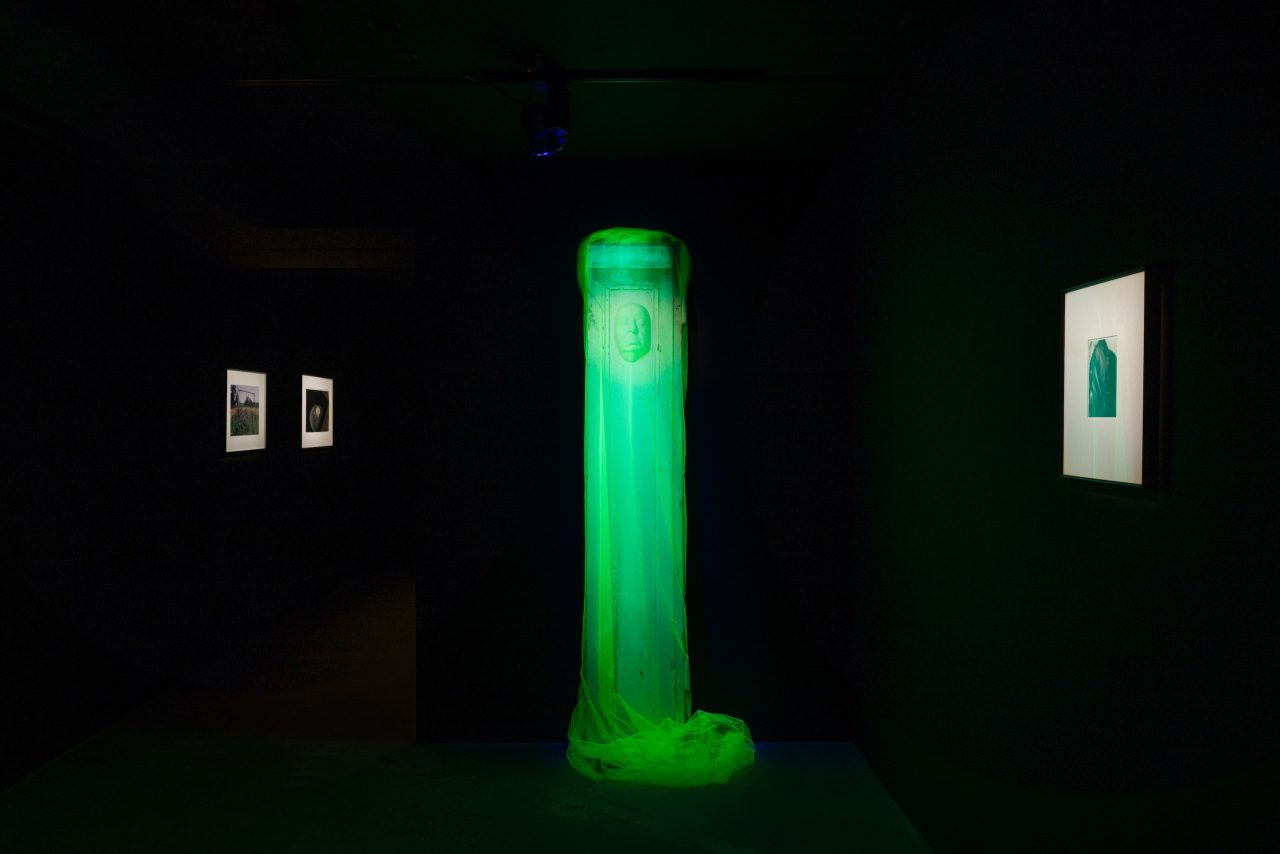
Elsewhere, a fragment of the oceanic world insinuates itself into the gallery. Carrier shells, or Xenophoridae, acquire the discarded husks of other creatures in a sort of mania of attachment, an endless trawling for security and meaning through an assimilation of the outside. Existing as configurations of pure exteriority, these specimens frustrate our conventional understanding of the shell as a metaphor for inwardness. As in Vincent Fecteau’s sculptures, the search for an interior only leads back out onto an infinite surface. Another theme reveals itself in this tension between structure and transcendence, language and perception—reflected both in Stephen Kaltenbach’s gnomic sculptures and Leo Valledor’s portals of hard-edged color. Amidst all this—perhaps hysterical—striving for the absolute, Danny Mcdonald’s Alfred in Tulle gazes on impassively, marrying ashen restraint with florid saturation.
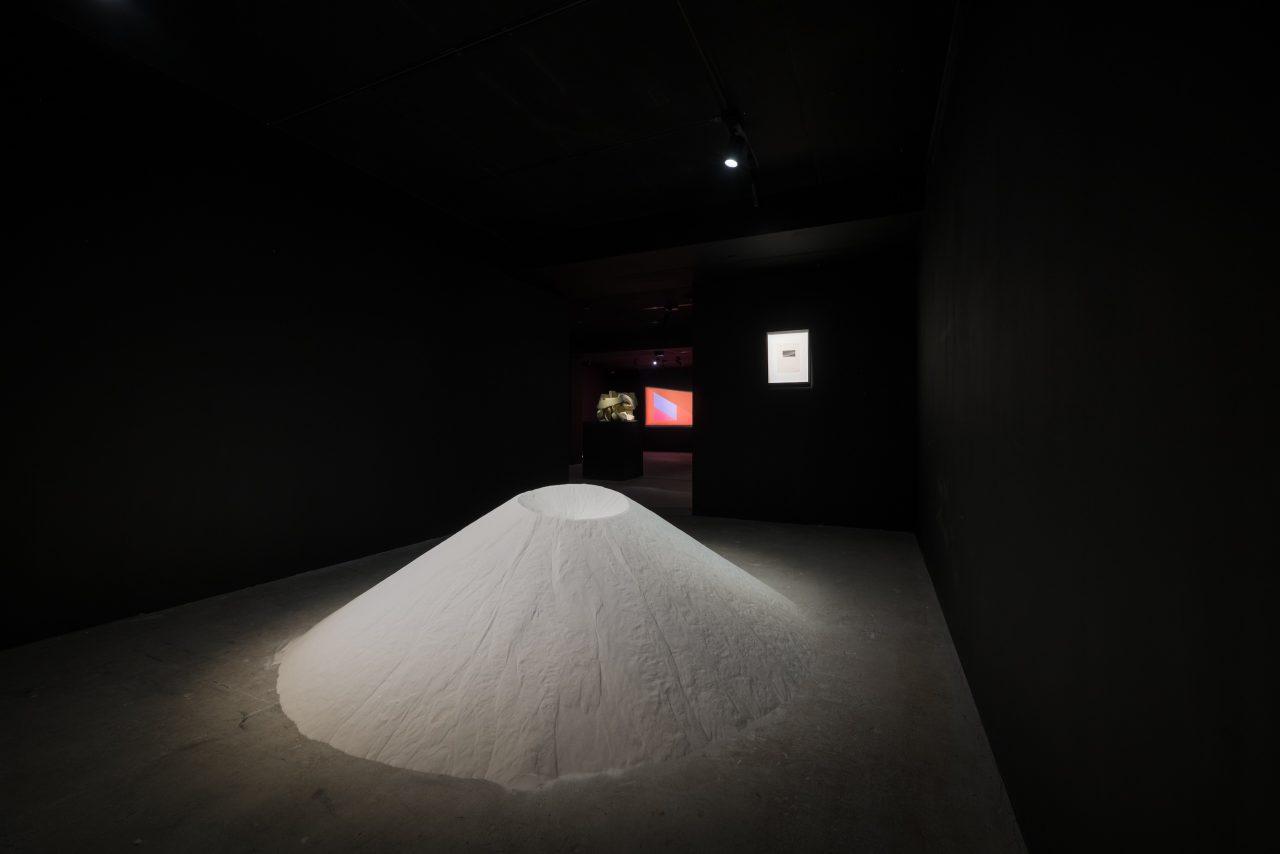
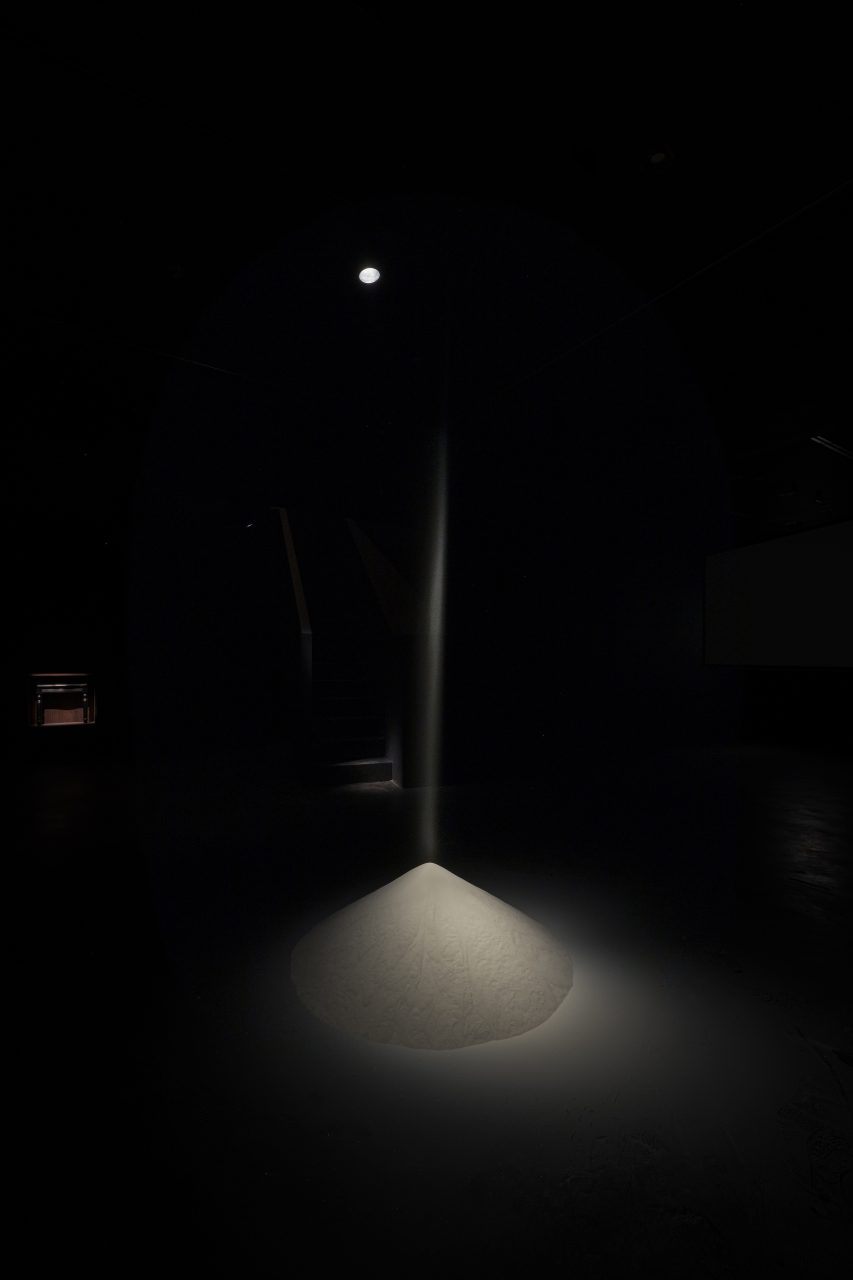
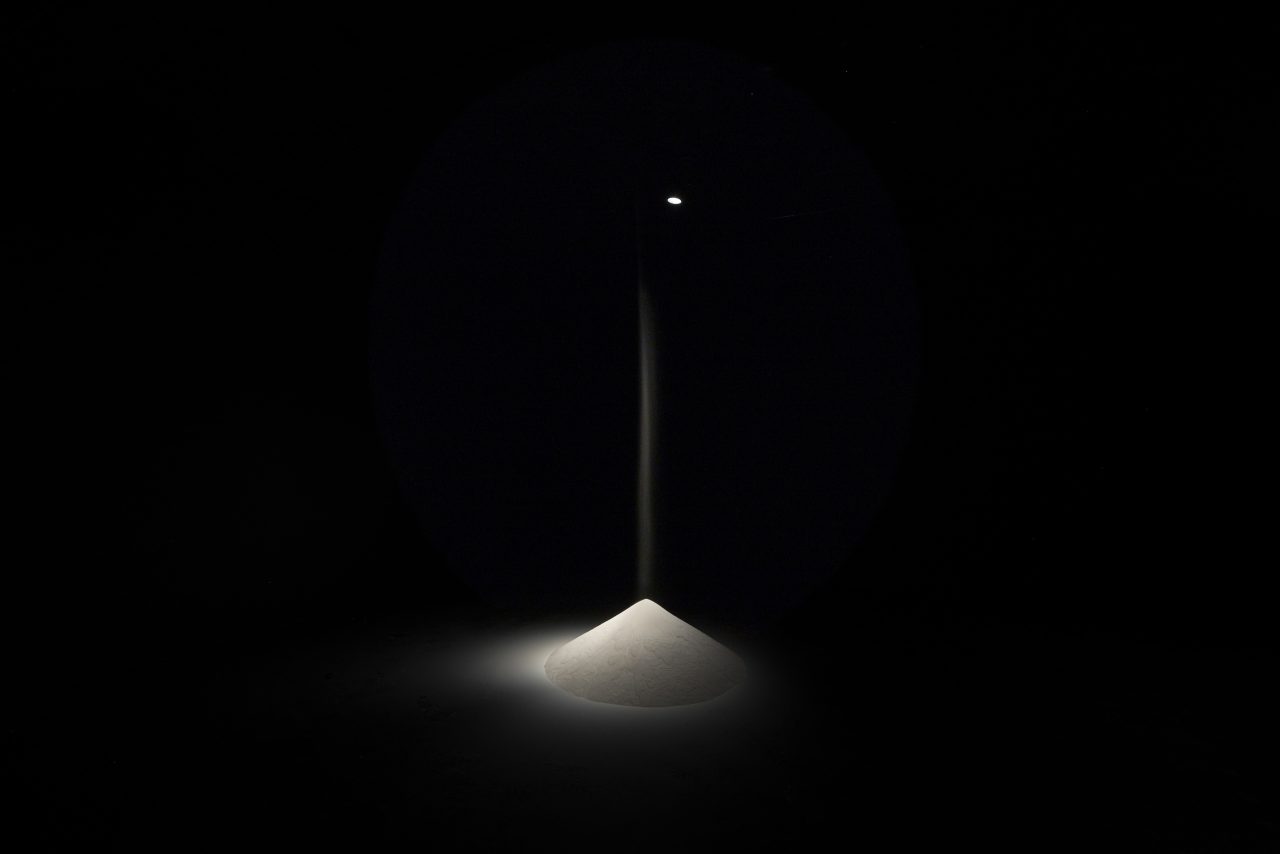
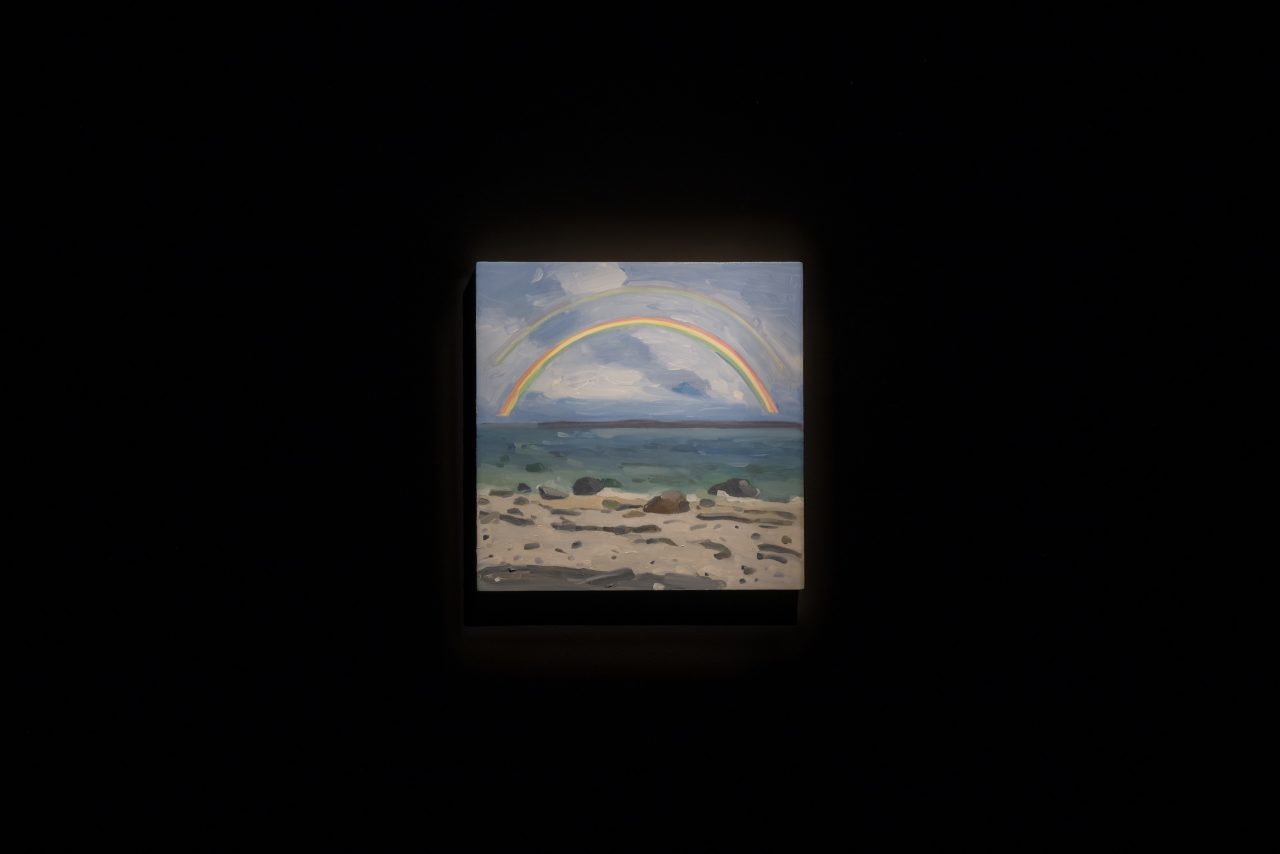
A conical mound of sand sits on the 19th floor of a Hong Kong industrial building, gradually filtering through an infinitesimally small aperture onto the floor below—a hole in the structure, a gradual depletion. Downstairs, a stream of glowing particles—grains of representation—descend from the darkness, pooling to create a mirror of the form above. This sand is bathed in the flickering neon ambience of Mary Helena Clark’s Clever Hans. Clark’s installation explores the intersubjective space between an animal and their researcher-cum-trainer. Interiority is reduced to a series of rhythmic intervals between stifling darkness and blinding exposure, suffusing the room with the alternating dread and elation of communion with the black box of another consciousness. A vision of a rocky Northeastern beach emerges from the void with the painful vividness of an optical aberration (Gallace). The sun, the sand, and the sea—haloed by the presence of a double rainbow. Suddenly, it seems, we have arrived—but to where? Skirting the perimeter of a just-tolerable madness, La Moustache returns us to ourselves, subtly but profoundly altered by the experience of these examples.
Special thanks: Arias Davis, Barry Rosen, Filippo Weck, Leah Levy, Lindsey White, Mary Valledor, NAID (Nurturing Independence through Artistic Development) Art Center, Peter Currie, Rio Rocket Valledor, Robert Snowden, Yuta Nakajima
* * *
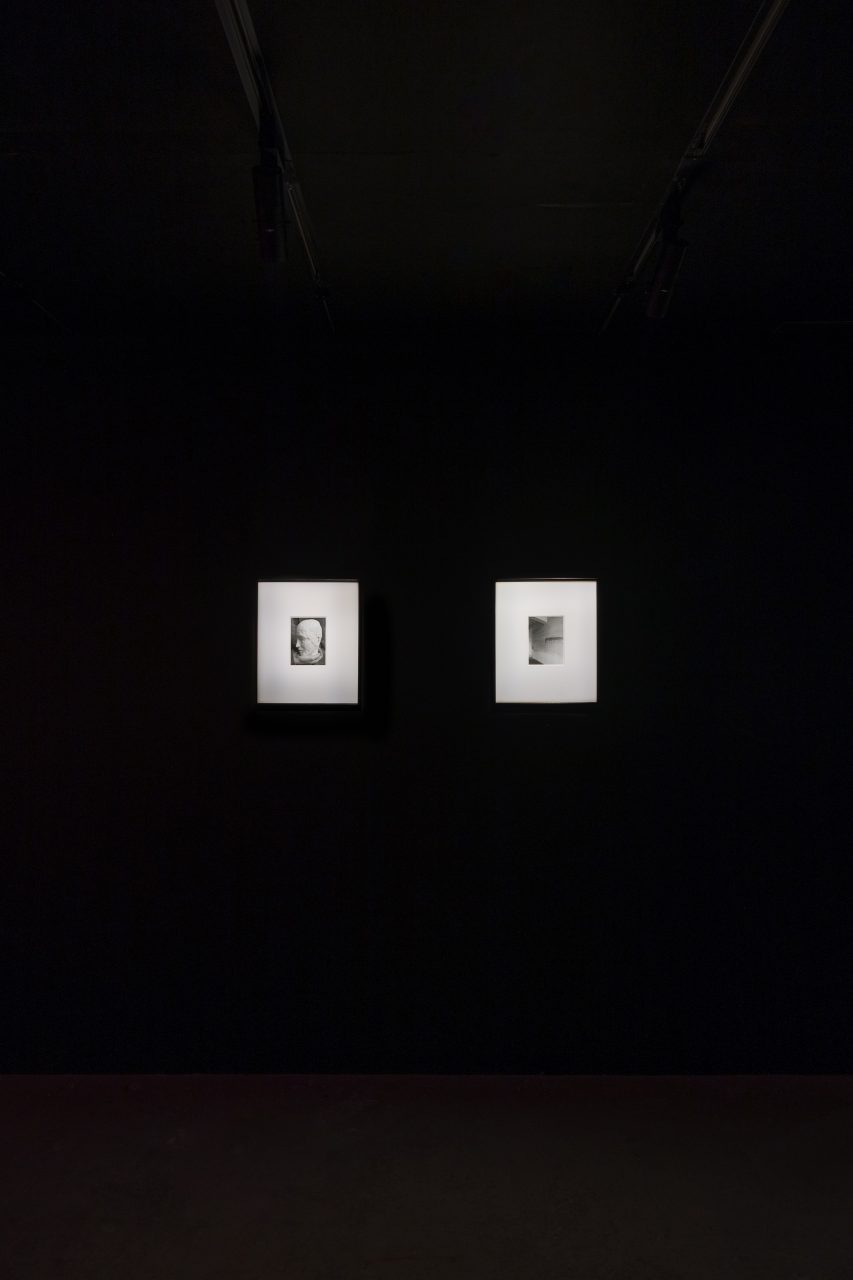
La Moustache is an exhibition inspired by a film of the same name. It was assembled for Empty Gallery in Hong Kong, a series of spaces in which the walls and ceilings are painted black and artworks are delicately lit with low wattage bulbs. Corners are fuzzy and indefinite under such conditions, and the assembled artworks are strange stars against their own dark skies.
La Moustache was constructed associatively; I had to make the exhibition in order to make any sense of it, not the other way around. I didn’t know what would happen on the ground, and things played out differently than I thought they would. For example, the show is much more surreal than I’d imagined. There are several works that incorporate sand; there are actual shells, too, and a literal book on the wall.
I hope that viewers might forge their own unique constellations of meaning as they navigate the mirrors and mirages of the exhibition. In many ways, this action is the subject of La Moustache, and the object of the entire exercise.
– Jordan Stein
* * *
Jordan Stein is a curator and writer based in San Francisco. In 2017, he founded Cushion Works, an exhibition space in the Mission District that aims to link past and present through the varied presentation of critical — and often overlooked — artworks, histories, and ideas. He has organized exhibitions at the Berkeley Art Museum & Pacific Film Archive, Artists Space, Yale Union, San Francisco City Hall, The Glass House, Matthew Marks Gallery, Fraenkel Gallery, and The Renaissance Society at the University of Chicago, where he formerly served as Curator of Special Projects. He is the author of Miyoko Ito: Heart of Hearts (Pre-Echo Press, 2024), a New York Times Best Art Book of the Year, Rip Tales: Jay DeFeo’s Estocada & Other Pieces (Soberscove Press, 2021), and most recently, Stephen Kaltenbach: Portrait of My Father (J&L Books, 2025).