Empty Gallery is pleased to present Spillover, Shanghai-based artist Ann Zhao’s first exhibition in Greater Asia.
Zhao’s title references a passage from Zhuangzi which classifies and ranks different modes of speech according to their ability to communicate the Dao. In this rarefied context, the term “spillover” refers to the indeterminacy of everyday speech in contrast to more fixed or formal modes—a self-renewing flexibility which allows plain words to keep pace with an underlying reality that is never static, but always dynamically changing.1 However, the term might refer equally to the chaotic breach of containment between one category and another—the inevitable pollution (or collateral damage) which occurs when the innate messiness of the subject spills over—as when the dissolution of a single relationship threatens the social coherence of a larger group or when illness or injury (the state of the body) compromise the supposed purity of an intellectual position.
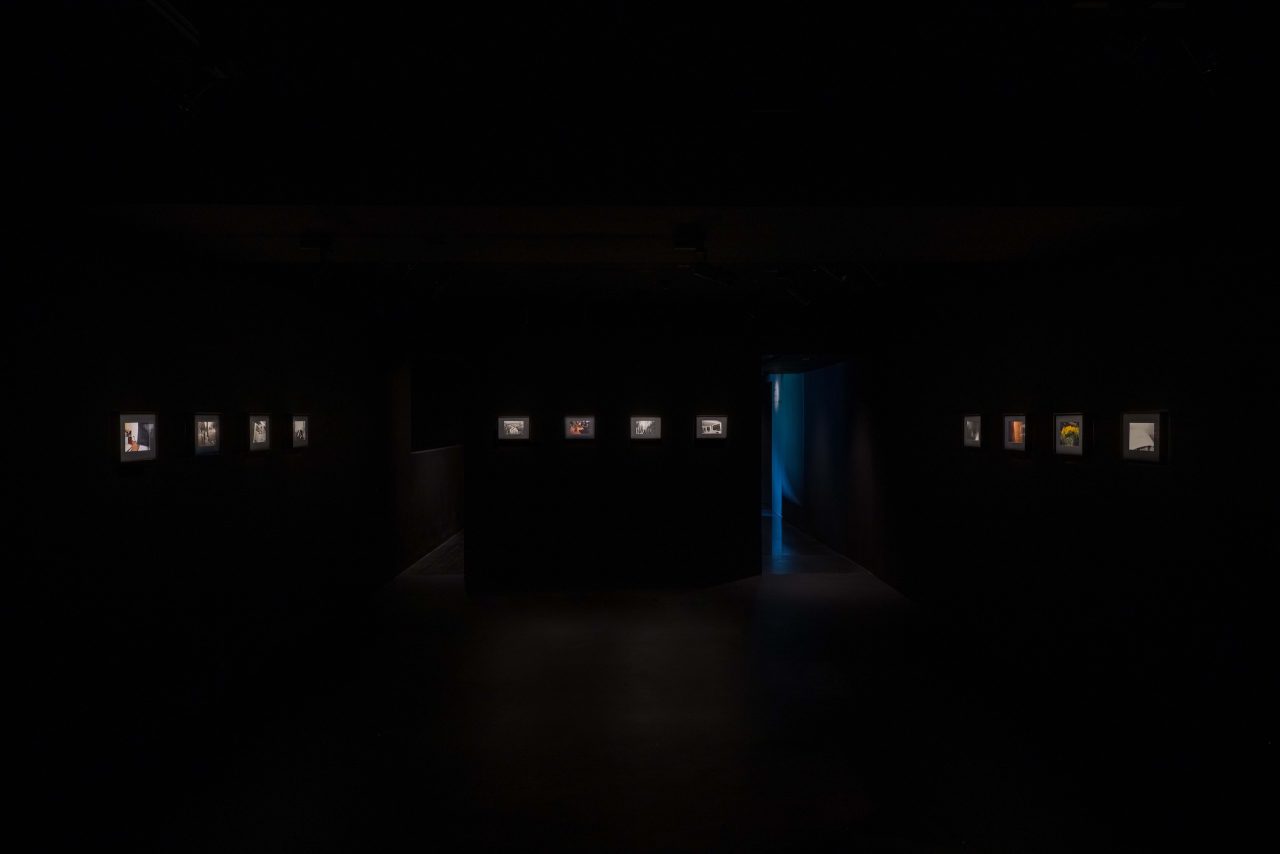
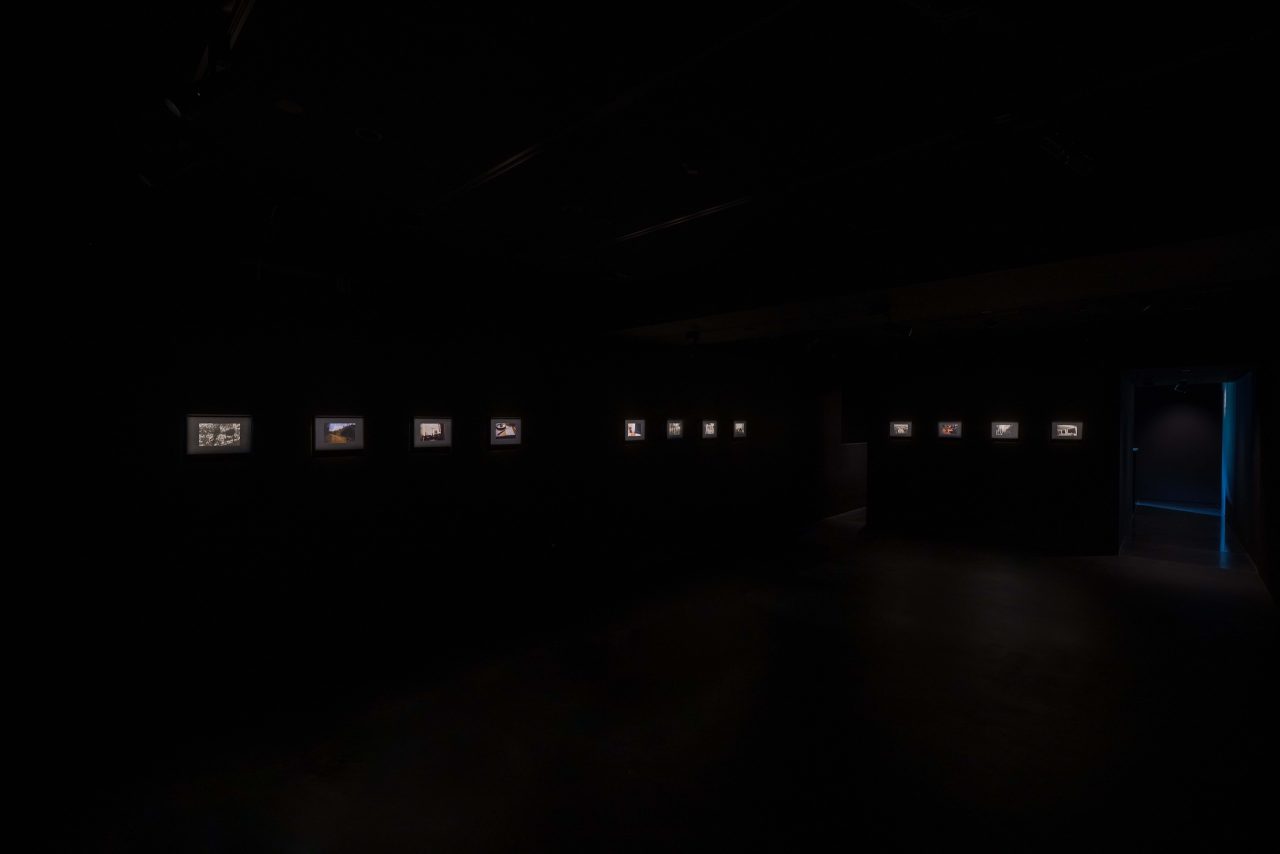
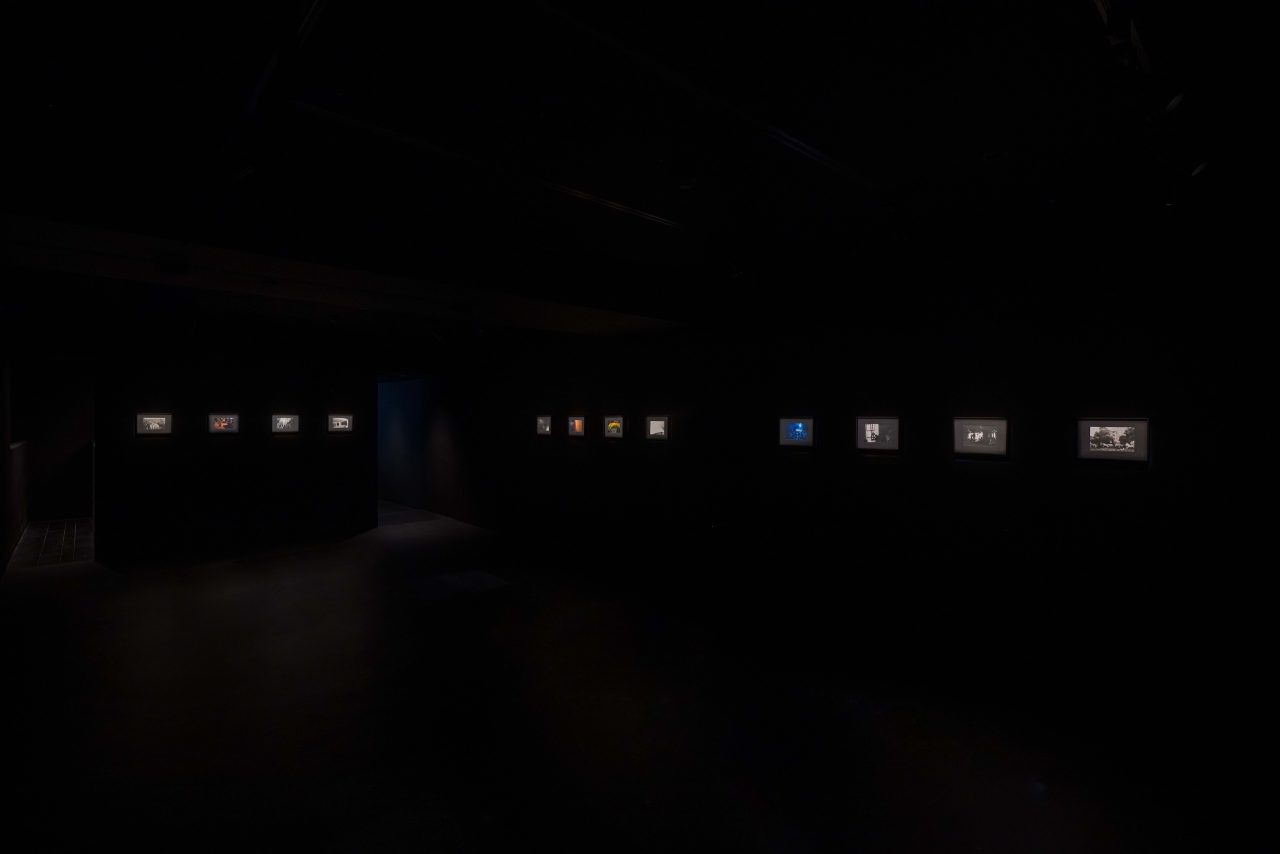
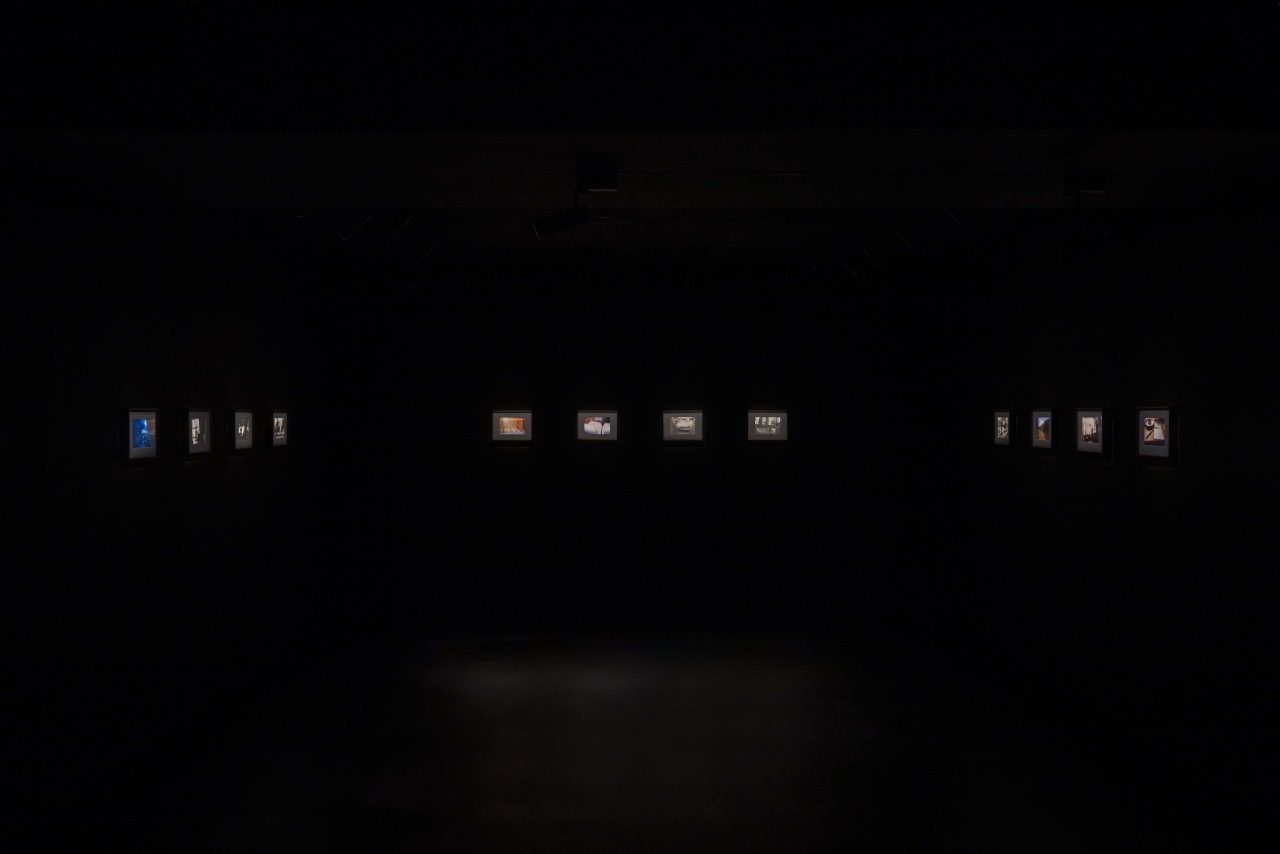
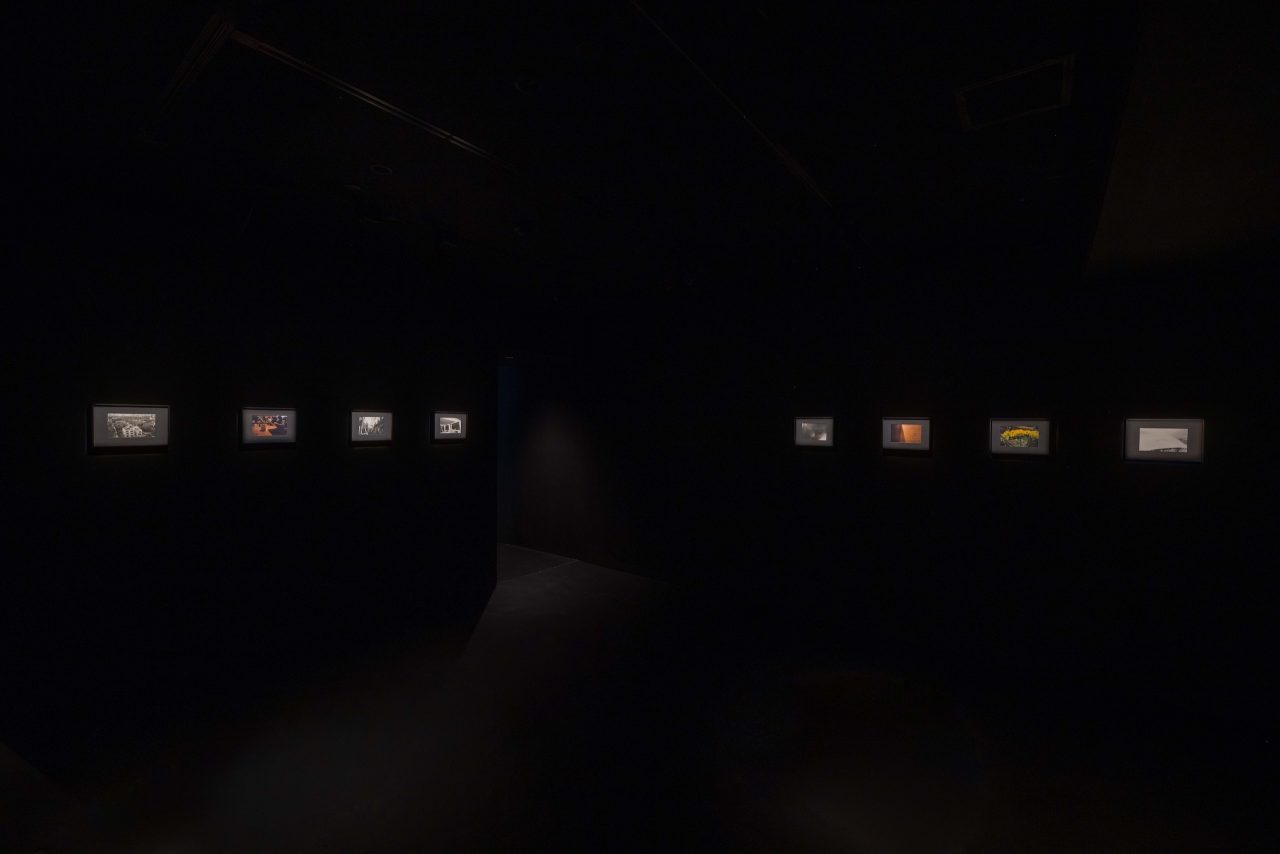
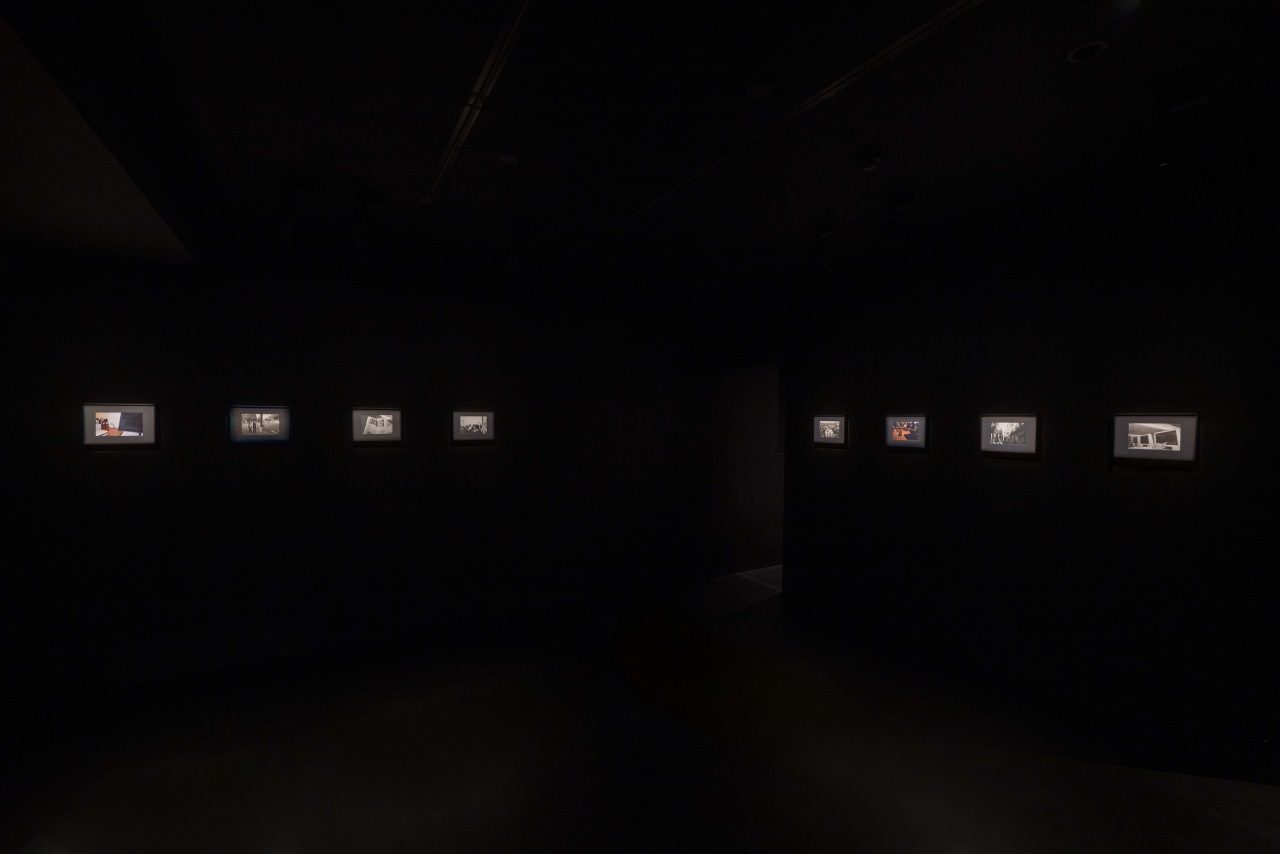
The heart of Zhao’s exhibition consists of Ben Ming Nian (本命年), an installation of twenty-four photographs on the gallery’s 19th floor. Alternating between shadowy black & white and muted color, this sequence of images presents a selection of moments from the stream of Zhao’s daily existence. As always in her practice, self-disclosure and artistic identity operate along a fluid line of ambivalence, erasure, and potential reversibility. Despite being nominally diaristic, many of these images remain deeply inscrutable. More atmosphere than evidence, they furnish something like an emotional weather report of Zhao’s life with the twelve year curse.2
While availing themselves of the visual tropes of intimate disclosure—inconsistent exposure, spontaneous framing, drifting focus, and a certain mundane fragmentation—the photos in Ben Ming Nian deliberately fail to perform the function of a unified social/artistic persona. We are always too close or too far from the represented experience—so that our primary perception is that of a blurred boundary which we can barely begin to imagine crossing. The contours of this boundary multiply themselves into the shape of a minor narrative: the flight from New York, the deliberate and furtive construction of a new life in Shanghai, the dissolution of old attachments and the growth of new ones. A series of subtle motifs reveal themselves: nourishment (both victual and spiritual), a sense of passage between states, a regard for animal life. References to Zhao’s artistic practice appear in a handful of images—an unfinished painting, an abandoned motif—but by and large, their content is doggedly, almost aggressively, commonplace. Within this gesture lies one of the central concerns of Spillover, a questioning of the existential value of Art and artistic life which is at once radical and commonsense.
By forgoing painting, the medium most associated with her practice, Zhao deliberately refuses to furnish the goods expected of her. She instead substitutes a photographic record of her inactivity and the negative space created by refusing to self-produce. This is Strau’s “non-productive attitude” raised to the nth degree—a kind of reductio ad absurdum where the time spent not producing is itself, in a final inversion, displayed and made to perform the public function of an artistic act.3 In Zhao’s analysis, so-called critical or advanced contemporary art is in a state of crisis. Perversely reduced to a series of ironic postures and facile end-game maneuvers, it is radically alienated not only from social consequence, but from its own origins in embodied experience. Zhao’s interest in Traditional Chinese Medicine–a practice she is now pursuing in lieu of painting—and its accompanying rhetoric of circulation furnishes a possible escape from this quagmire by allowing her to reframe questions of taste and validity as ones of vitality. Art fails to perform its proper function if its circulation is blocked or restricted within a narrow orbit of self-reference. It is cleaved from the energetic breath which nourishes our physical being and which is rhythmically expressed through the art object—not only in Chinese painting but equally in Minimalism, Conceptualism and other “advanced” forms of Western modernism. On this last point, it helps to remember the investment in energetic philosophies underlying the artistic practices of some of modernism’s most cerebral and protean practitioners—such as Duchamp and Picabia.4
These thematics were already hinted at in Zhao’s previous exhibition, whose title—Idiot Wind—brought into play a contradictory matrix of associations between wind as empty performative speech (windbag), deleterious external influence (feng) and vitalizing breath-image (qi). Here, we can productively contrast Kippenberger’s elevation of context over content—a phenomenon which has grown to truly epidemic proportions over the generations—and the attitude to reference underlying premodern Chinese painting, itself a densely intertextual practice:
The proper conduct and teaching of the sage is that, though reference is at work (forming concreteness), he does not allow himself to be enslaved by that reference and that concreteness… He does not cling or give his allegiance or get bogged down, nor does he break loose and go without: this is what constitutes his availability.5
From this perspective, the compulsion to perform the social role of an artist in our contemporary moment might be thought of almost as an illness, evidence of something like an insufficient relation to absolute reality. Ben Ming Nian challenges the viewer’s libidinal investment in Art as ideal and lifestyle—questioning why they are standing in a dark, airless chamber attempting to parse indecipherable fragments of another person’s life rather than living one themselves.
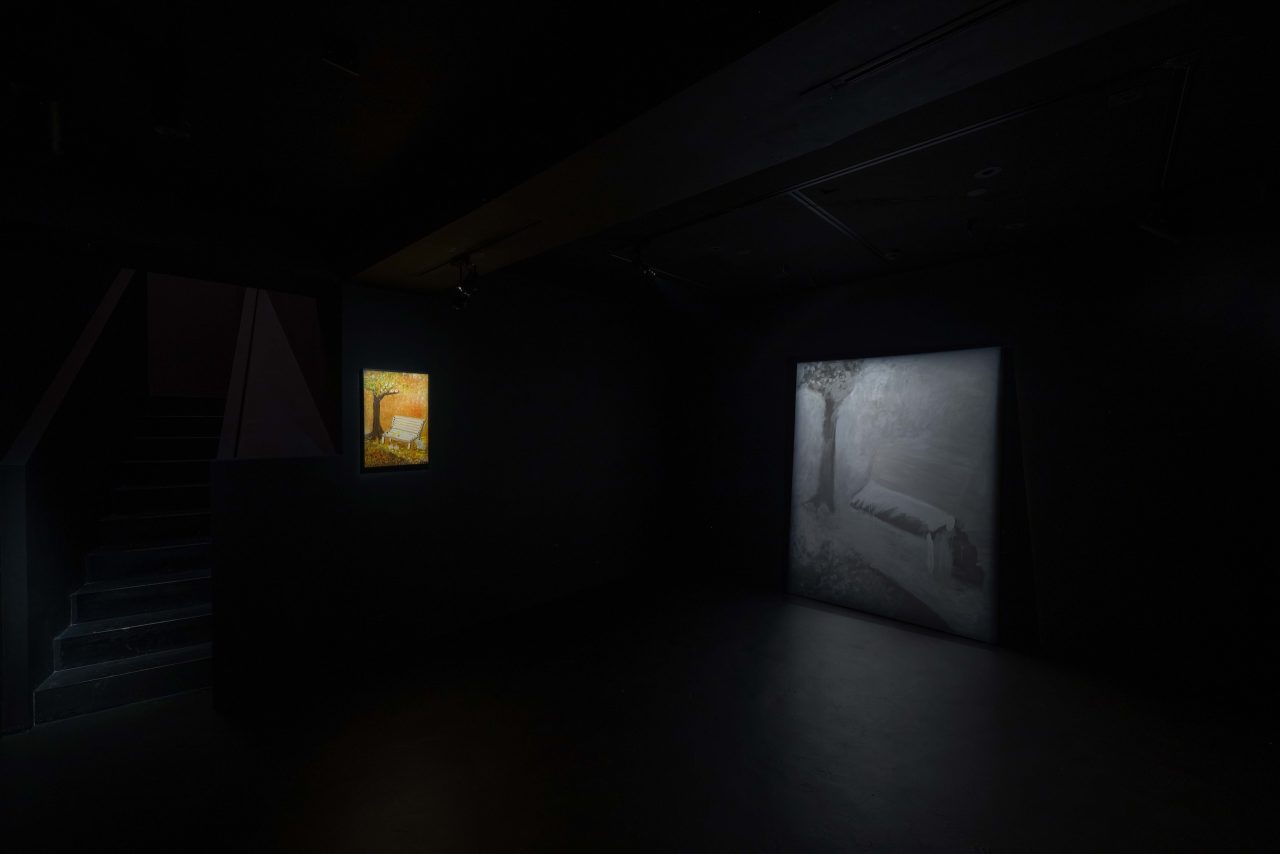
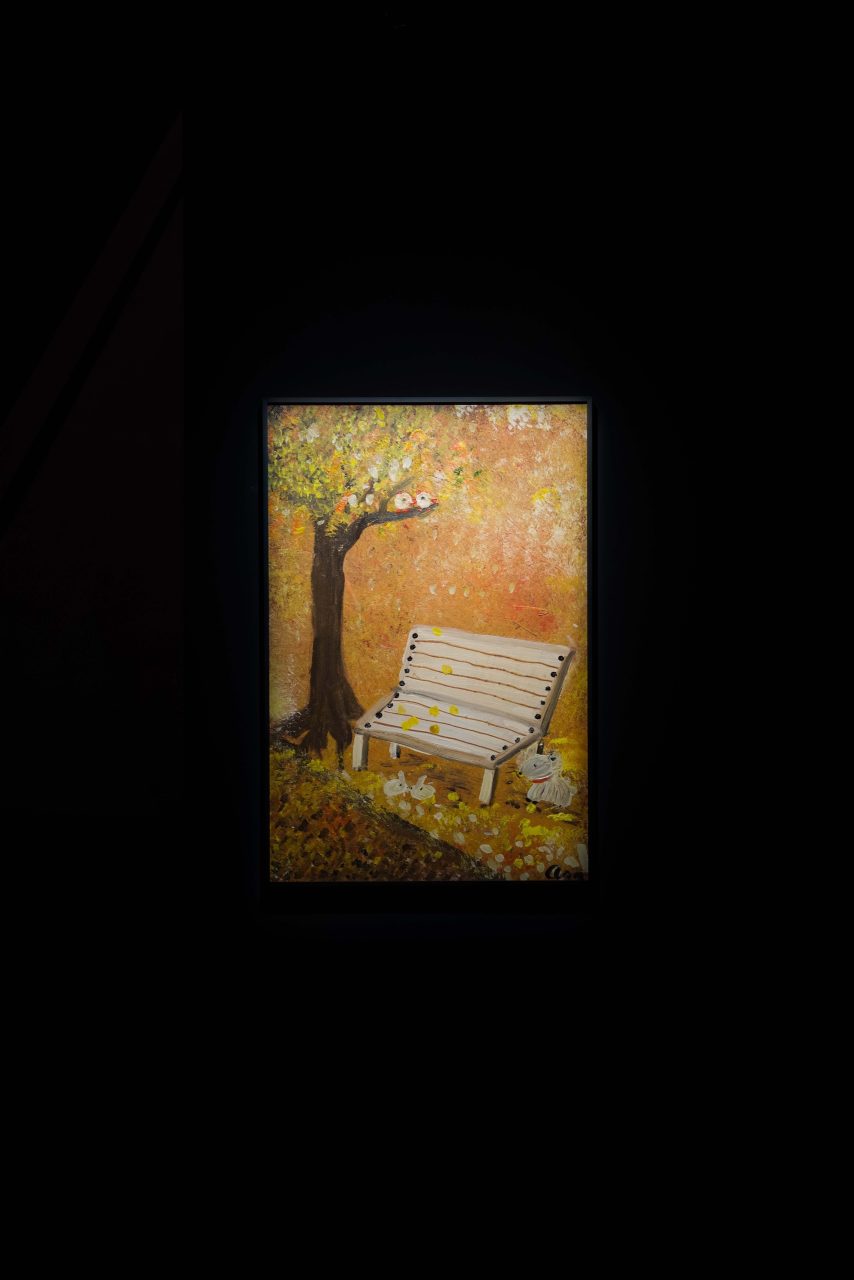
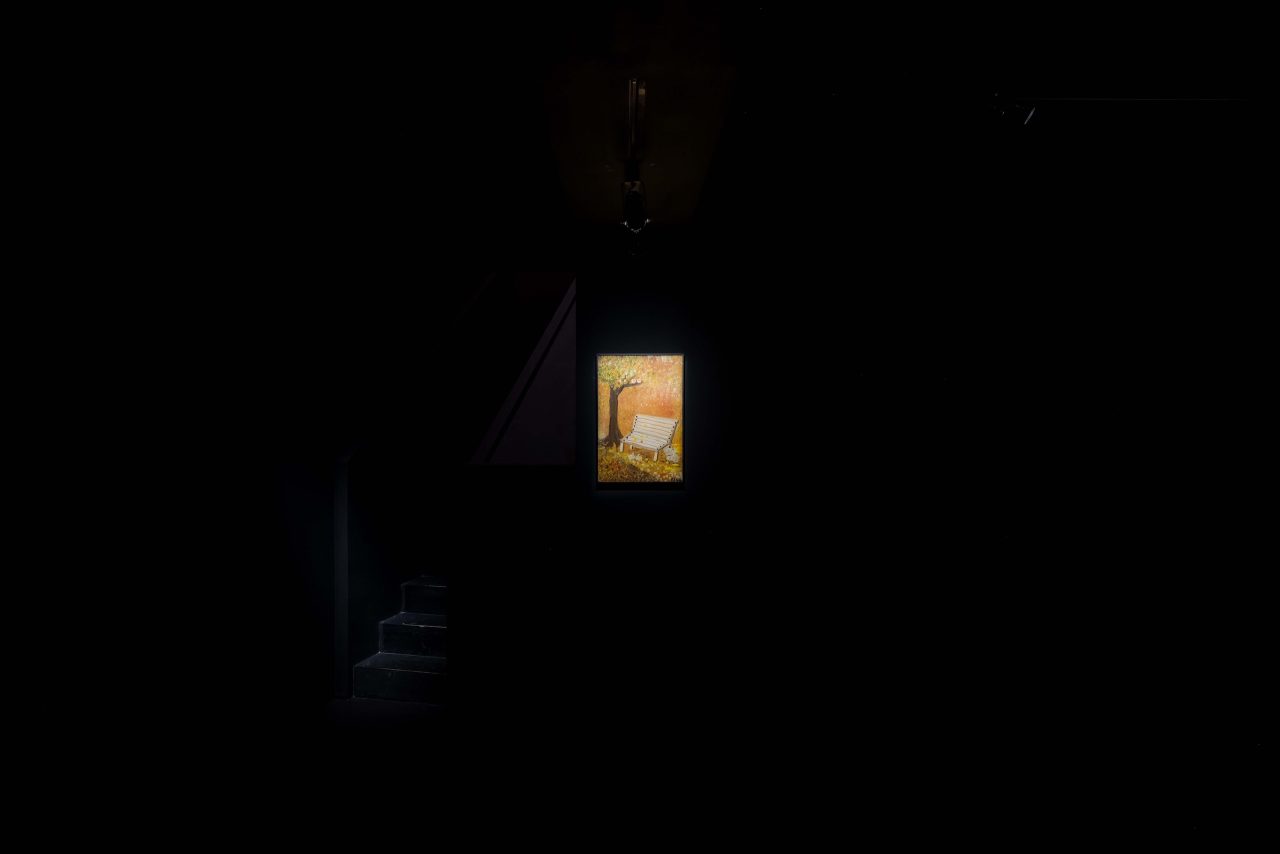
On the 18th floor, Zhao extends these thematics by staging a confrontation between two works from radically different periods of her own life. Untitled (2011) is a pastoral childhood painting which depicts an autumnal park teeming with wildlife, Curse (2026) replicates the same motif in black monochrome at an enlarged scale. Zhao’s self-appropriative gesture is simultaneously an enshrinement of an earlier moment, a repetition which reveals difference, and a meditative or therapeutic mirroring—something like an evaluation of existential distance traveled. The “work” here consists not in the two paintings themselves, but rather in the activated void or space of relation created between them.
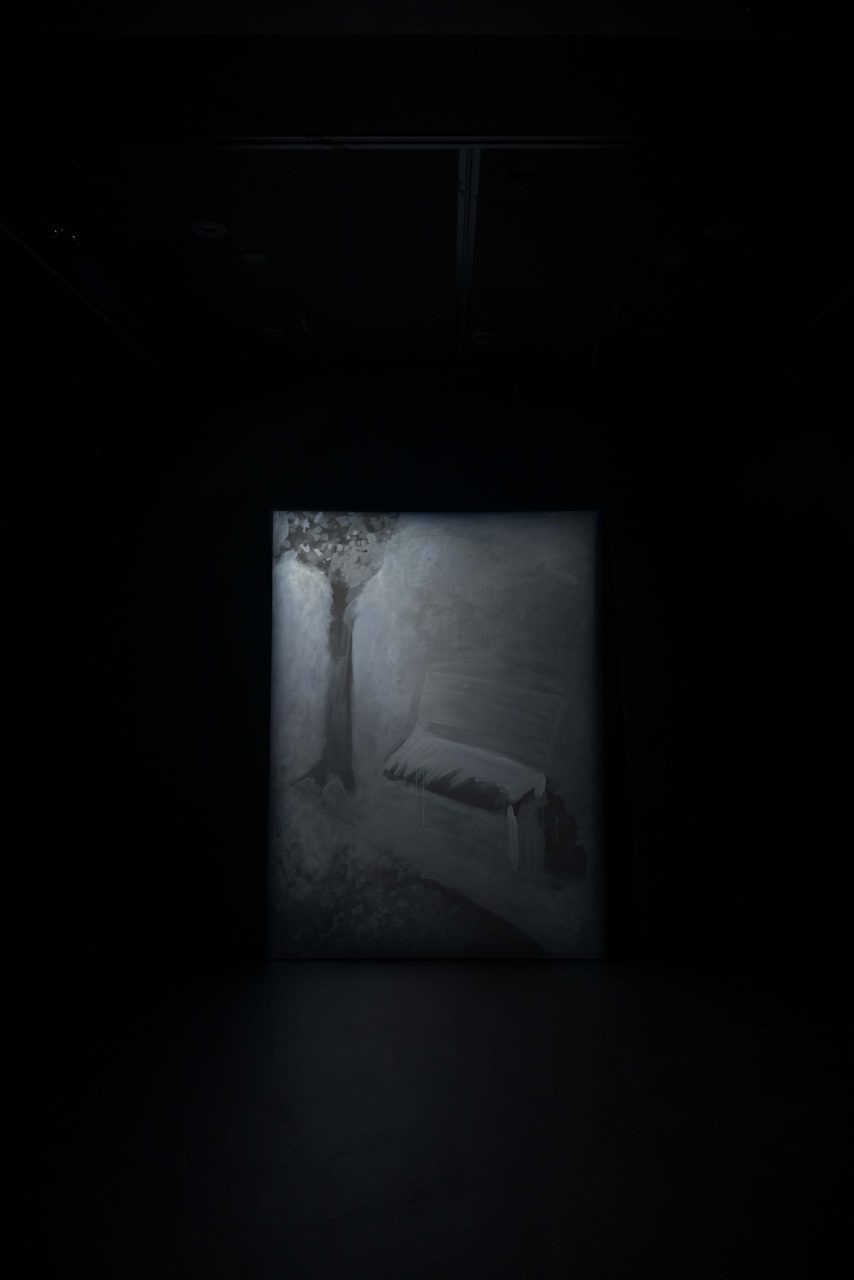
Curse ostensibly depicts the same subject as Untitled—a bench underneath a tree. Executed in brushy washes of gray and black, the outlines of these two environmental signposts are rendered blurred and unstable. Recognizable forms threaten to disappear into the overwhelming blankness of the painting’s ground. A certain mistiness in manner brings to mind blooming spores or clouds of pollution whilst conjuring the exhausted specter of the literati tradition. These sentiments are echoed in a colophon on the canvas’s edge which fantasizes about personal disappearance as a solution to the problem of loss. The cheerful animals which populated Untitled, and which seemed to signify a sense of spiritual wholeness are also markedly absent. Instead, we are left with a sense of profound deficiency.
The relation between these two artworks, both created while living in Shanghai, suggest a set of uncomfortable dualities: child/adult, ideal/real, innocent/cynical, simple/complex, and hope/despair—to touch on only a small handful. (Self)-knowledge, experience, and the passage of time are represented as entropic rather than unifying forces. However, a prolonged experience of the space between them begins to unravel these seeming antinomies through the presence of a third term—the unstable body. Moving between the two paintings and returning to Curse, the disintegration of discrete forms which at first seemed purely negative begins to unfold itself. The canvas’s monochromatic field appears animated by a murky internal luminosity not unlike the dusty light which emanates from the scum on a pond’s surface. We notice the way in which the reduced forms of tree and bench are articulated not by positive outlines, but simply by virtue of the negative space left in Zhao’s gray overpainting. The vacancy of erasure gives way, if only haltingly, to the hopeful potentiality of blankness. The spectrum between naivete and self-knowledge is no longer unidirectional, but is instead rendered cyclical and reciprocal. This awareness of ceaseless process and perpetual incompleteness—also experienced as dissatisfaction or loss––emerges as the hardest earned lesson of maturity—indeed, one which we can never actually complete learning and must instead simply live with, resurrecting our own innocence in spite of ourselves.
The pairing of Untitled and Curse speaks to an attempt at re-establishing circulation, to a re-ligation, a re-tying or re-binding. Here again, we encounter the potential for reversibility, but one which is not idealized, but rooted in the body and painfully wrenched from individual experience. Rather than hanging Curse, Zhao has opted to leave the canvas simply leaning against the gallery wall.
By attenuating the closure of meaning and leaving open a space of transition, Zhao offers a final possibility: that the rejection of Art articulated so forcefully earlier in her exhibition may itself, too, offer itself up to change.
1 Chuang-Tzu, Chuang-Tzu: The Inner Chapters, trans. A.C. Graham, (Hackett Publishing, 2001), 26.
2 本命年 Ben Ming Nian refers to the years that align with one’s personal Chinese zodiac, which occur every twelve years—one Zodiac cycle. One’s Ben Ming Nian is typically associated with misfortune and bad luck, due to the year corresponding with being in conflict with the corresponding Tai Sui 太岁general of the year. Tai Sui is a celestial deity in Chinese folk religion, and there are sixty Tai Sui generals, thus they rotate on a sixty-year cycle.
3 Josef Strau, “The Non-productive Attitude”, in: Make your Own Life. Artists In and Out of Cologne, (University of Pennsylvania, 2006).
4 See Jacquelynn Baas, Marcel Duchamp and the Art of Life, (MIT Press, 2019).
5 François Jullien, The Great Image Has No Form, or On the Nonobject through Painting, trans. Jane Marie Todd, (University of Chicago Press, 2009), 100-101.
* * *
Ann Zhao (b. 2002) lives and works in Shanghai. Past exhibitions include Ochi Gallery, Idaho (2025); Mondrian, Hamburg, DE (2024); Theta, New York (2024); Derosia, New York (2023); Daisy Sanchez’s Window, New York (2022); Estrella, New York (2022) and Maxwell Graham / Essex Street, New York (2022), which was also curated by the artist. Zhao graduated with a BFA from Rhode Island School of Design in 2025.